
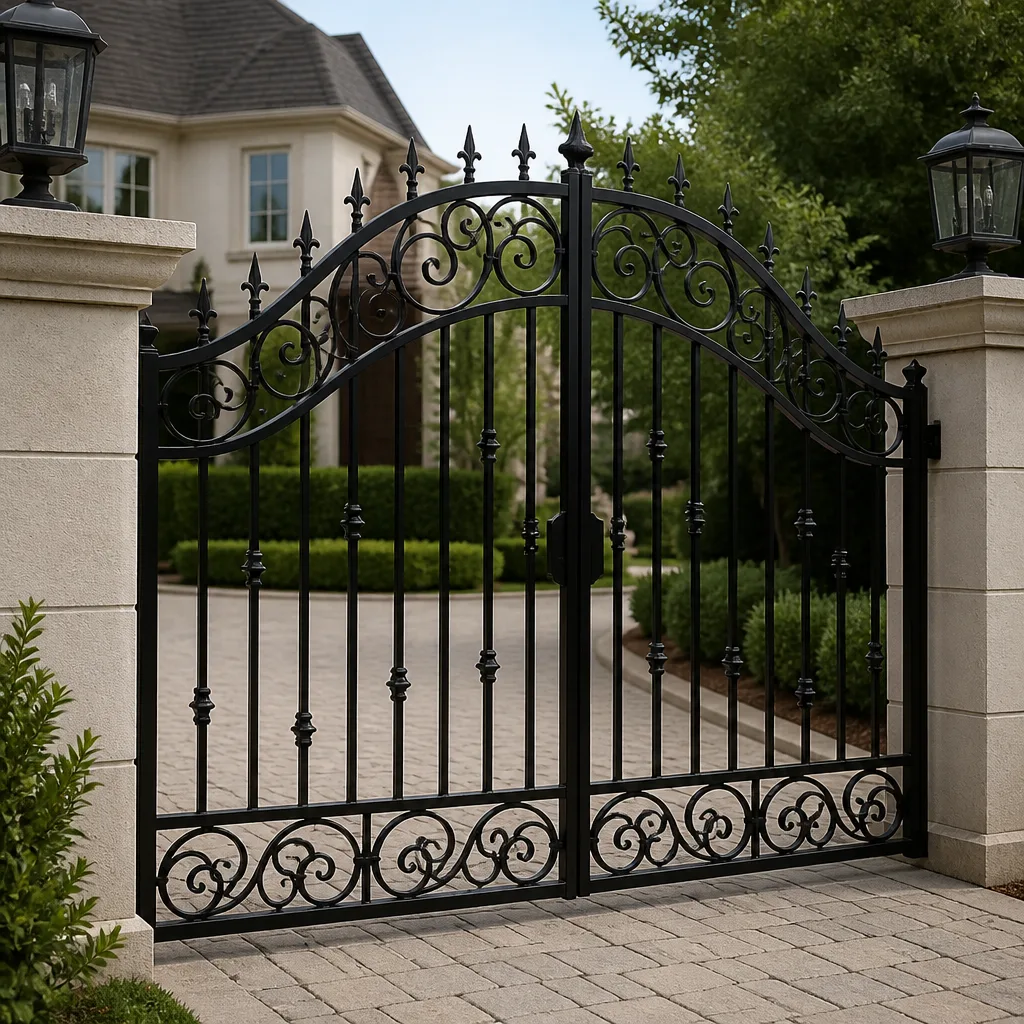
 Wrought iron
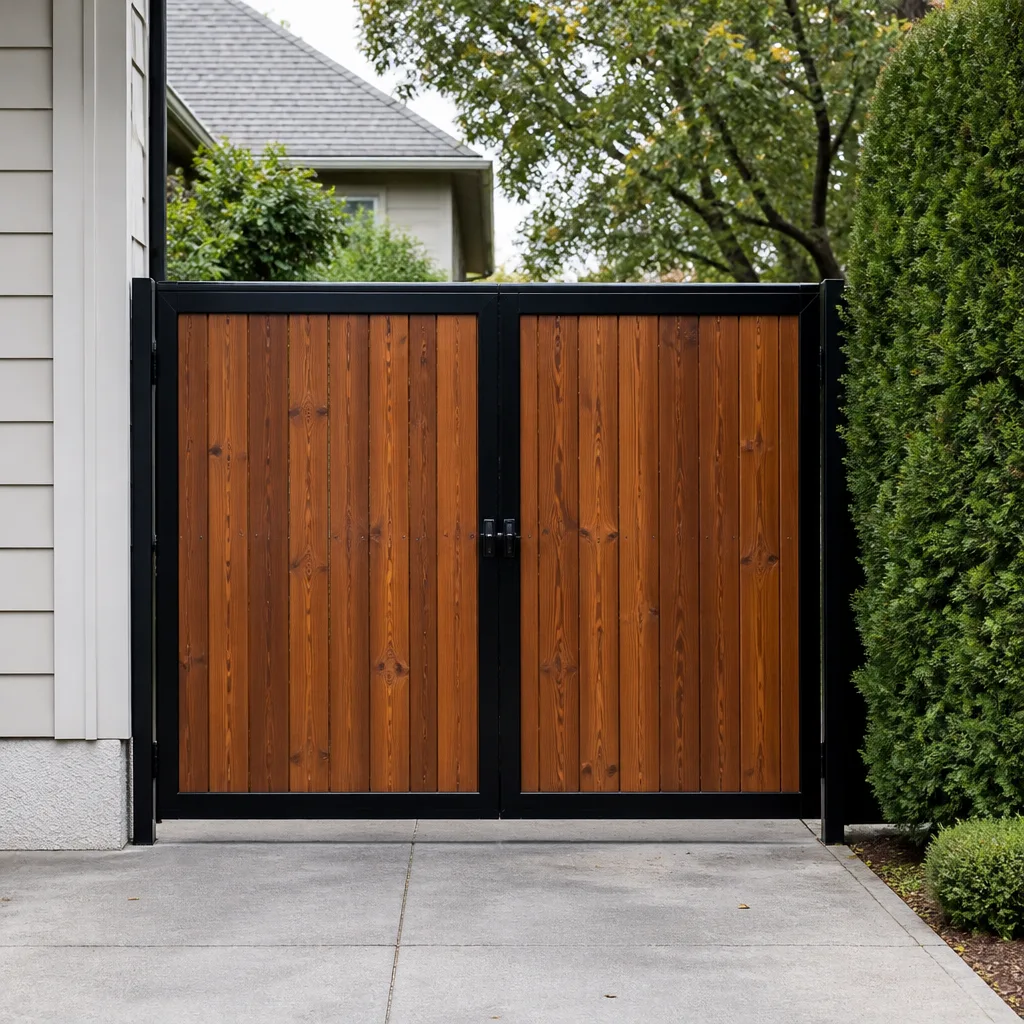 Wood & steel frame
 Farm & ranch
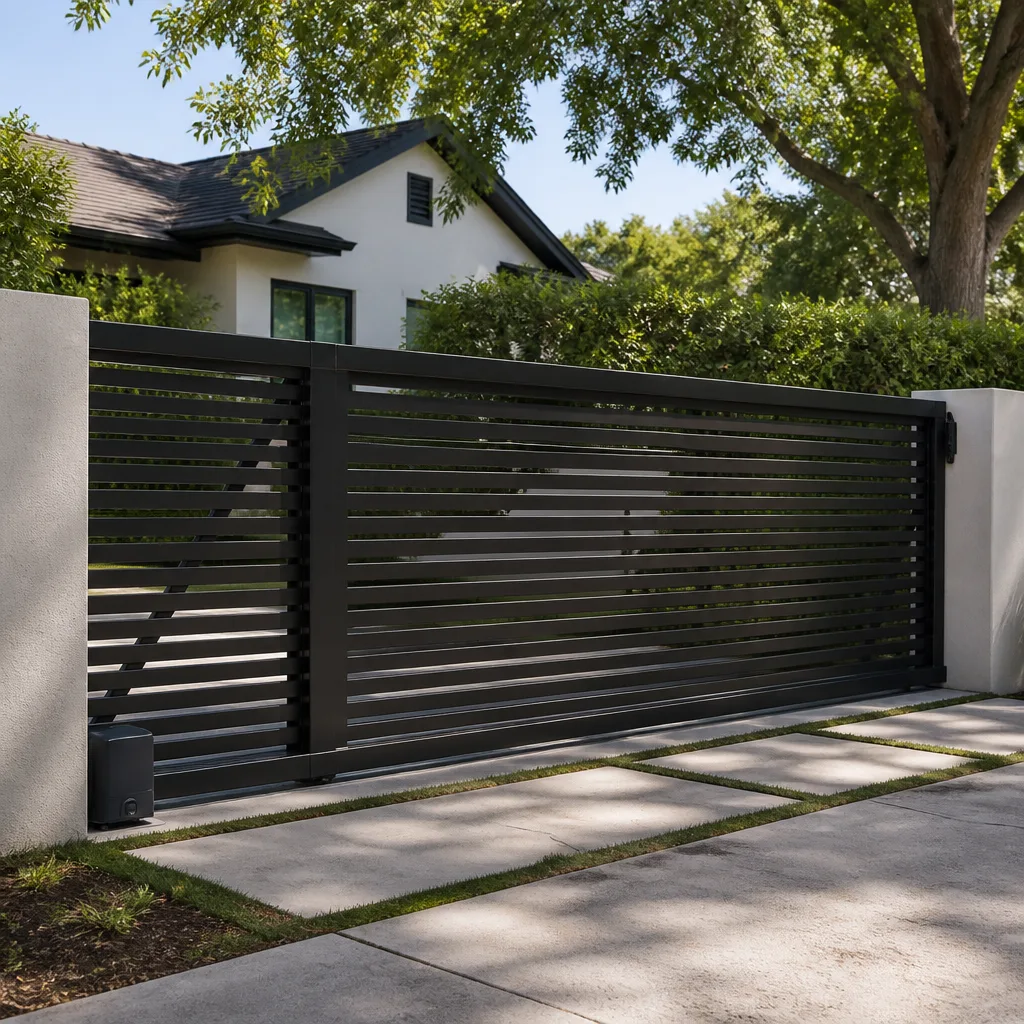 Sliding driveway gates
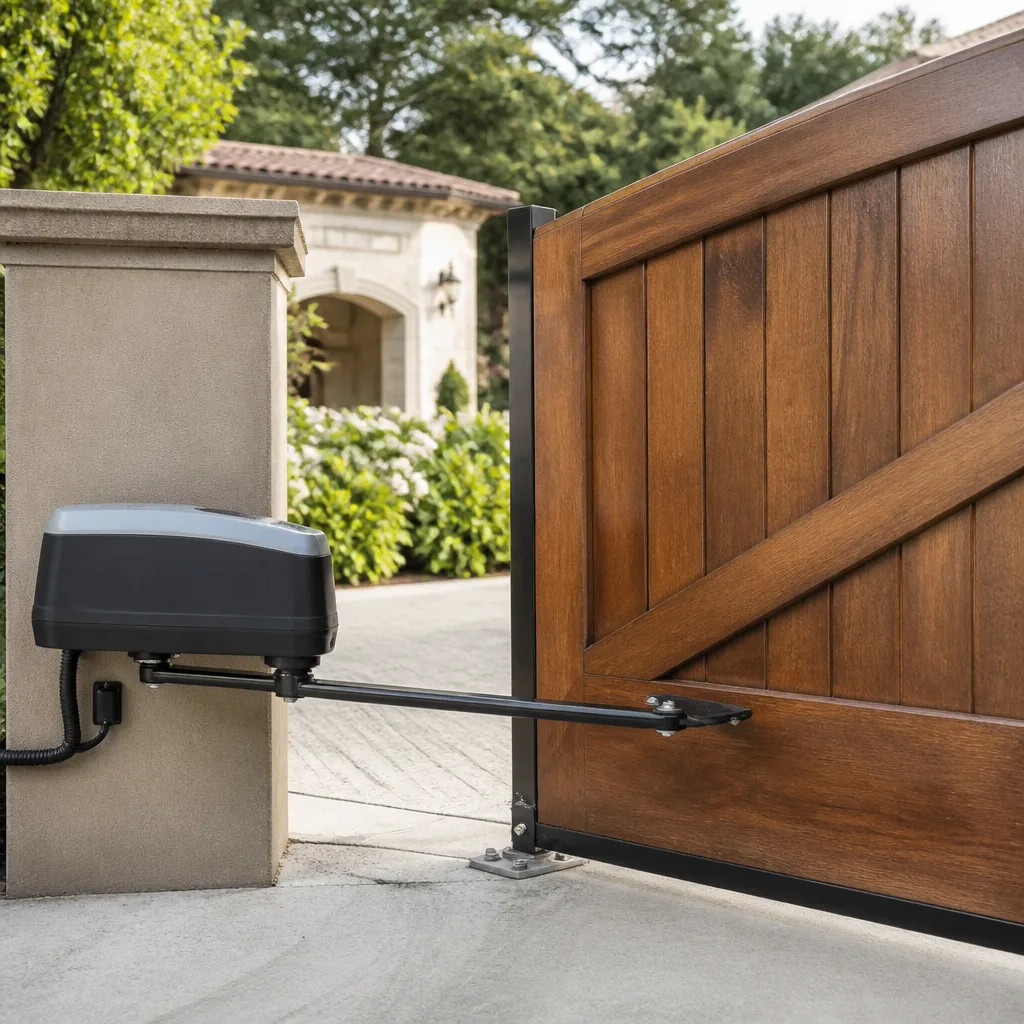 LiftMaster operators
Free on-site gate assessment - hinges, posts, and your LiftMaster or Nice gate operator checked before anything is quoted
The assessment is free and the quote is the invoice.
Get your free estimateLinear Hinge & Roller Replacement: The Fort Worth Owner’s Guide
Most Linear gate hinge and roller replacements in Fort Worth run between $185 and $420 installed, depending on whether we’re swapping a single roller bracket or rebuilding both hinge points with new plates. We stock Linear-compatible hinges and rollers on our trucks, so this is usually a same-day repair once we confirm your model. You probably landed here because your gate started dragging, squealing, or leaning about half an inch lower on the latch side than it used to sit, and you’re trying to figure out whether it’s the hinge, the roller, or both. That’s the right question to ask.
What we see most often with Linear gates in Fort Worth is that the roller fails first, then the stress transfers to the hinge. The roller flattens or seizes, the gate starts sliding metal-on-metal instead of rolling, and within a few months the hinge bushing is ovaled out and the gate sags. By the time you hear that low groan when the gate moves, you’re usually past the point where a lubricant spray fixes anything. The good news is that this is one of the more straightforward Linear repairs we do, and it doesn’t require replacing the operator or the gate itself.
Which Linear Models This Applies To
Linear makes a broad range of residential slide and swing gate operators, and the hinge and roller hardware spans several model families. The parts we most commonly replace show up on Linear’s SL and SW slide gate lines, the LRA and LRX residential swing operators, and a good number of older Linear gate frames still running original hardware from the 1990s and early 2000s. The compatibility question isn’t really about the operator model number, it’s about the gate frame and track dimensions. Linear gates use a few distinct roller diameters and hinge bolt patterns, and the wrong roller will either bind in the track or sit too high and let the gate rock.
Here’s the practical way to identify what you have: look for a label plate on the operator arm or the control box, which gives you the model series. Then measure the roller diameter across the wheel face. Most Linear slide gates we see in Fort Worth run a 2-inch or 3-inch nylon roller, while heavier commercial-style frames use a 4-inch steel roller. The hinge side uses a plate-and-pin design, and the bolt spacing on the plate matters more than the operator model. If you snap a photo of the hinge plate with a tape measure held against it and text it to us, we’ll tell you what it needs. As an independent service provider, we’re not affiliated with Linear, but we’ve been matching their hardware for over a decade, and we know which aftermarket equivalents hold up in Texas weather and which ones don’t. For Linear specifically, we prefer OEM spec rollers when they’re available, because the nylon compound Linear uses doesn’t flat-spot as quickly as the cheaper generic rollers in high heat. The hinge plates we’ll upgrade to a heavier gauge steel when the spacing allows, since that’s where Fort Worth’s summer sun and occasional freeze-thaw cycle does the most damage over time.
Styles & brands we work with
Signs Your Linear Hinge & Roller Replacement Is Failing
- The gate drags or requires a shove to start moving. The roller has flat-spotted or the bearing inside has seized, so the wheel is skidding instead of rolling. You’ll feel the resistance right at the start of travel, before the operator kicks in.
- A low grinding or squealing sound during travel. That’s metal rubbing on metal, usually the gate frame dragging across a seized roller or the hinge pin scraping against a worn bushing. Lubricant quiets it for a day or two, then it comes back.
- The gate sits lower on the latch side, or the gap under the gate isn’t even. This is hinge wear. The bushing inside the hinge barrel has ovaled out, and the whole gate has settled. You might also see the gate scrape a high spot in the concrete it used to clear.
- The gate wobbles side to side when you grab it and shake. Loose hinge bolts or a worn pin allow lateral play. Left alone, it accelerates wear on the operator arm and the track.
- The gate reverses or stops midway more often. When the roller drags, the operator’s current sensor trips because the motor is working harder than it should. The operator thinks it hit an obstruction, but really the gate is just fighting worn hardware.
See the difference
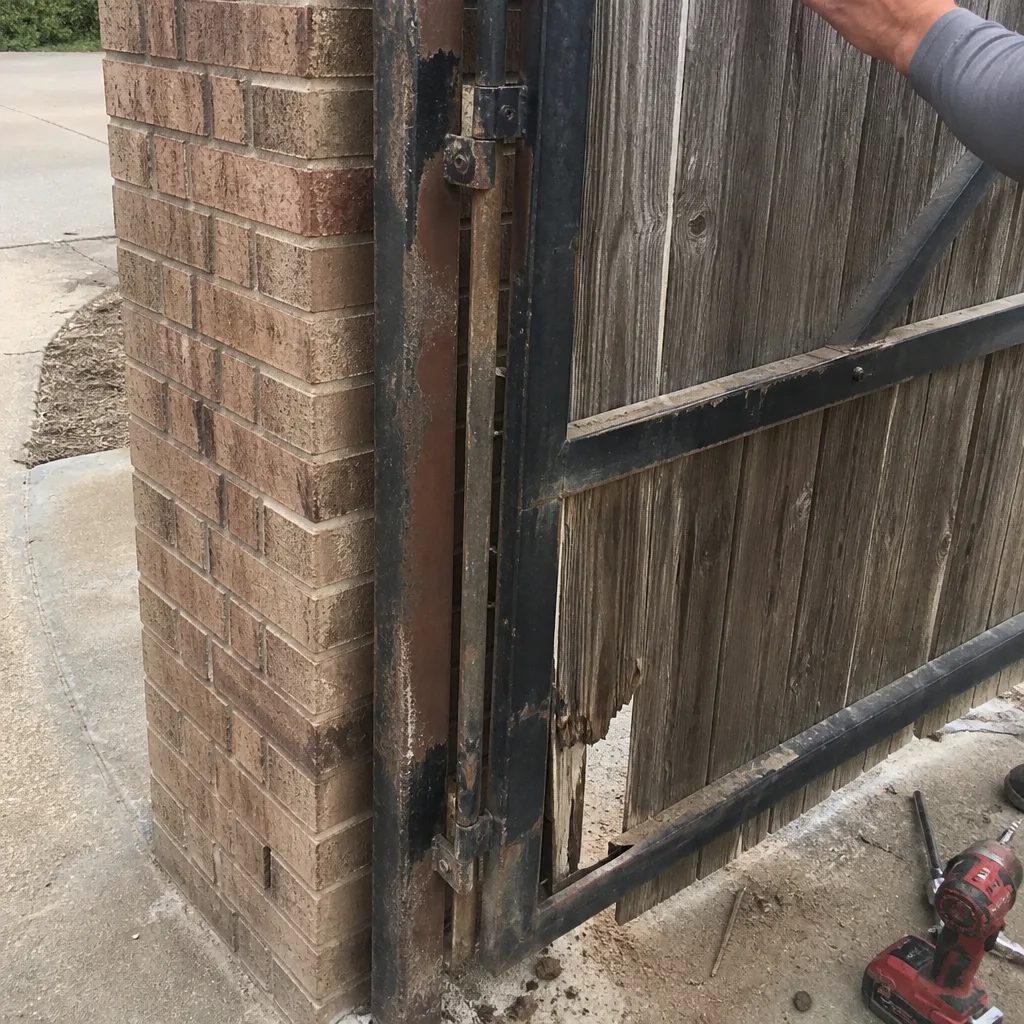 Before
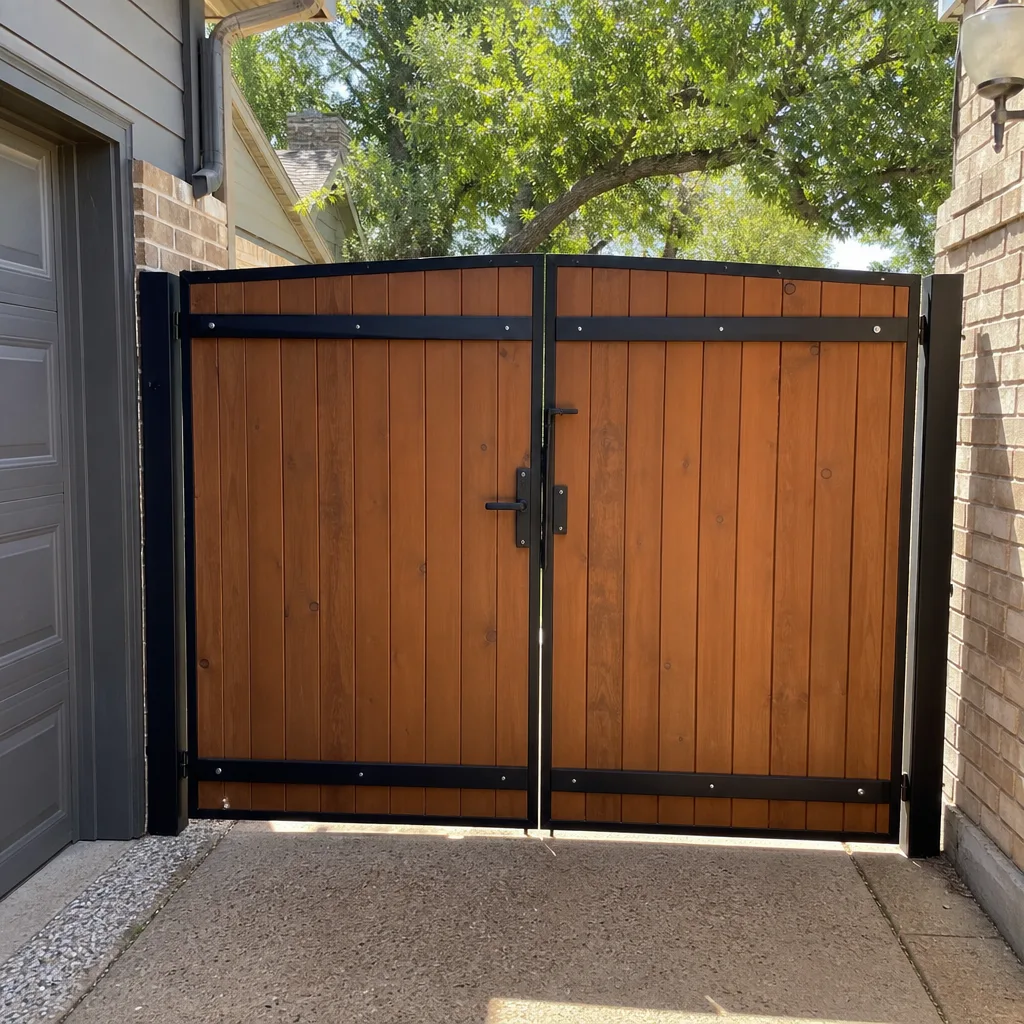 After
After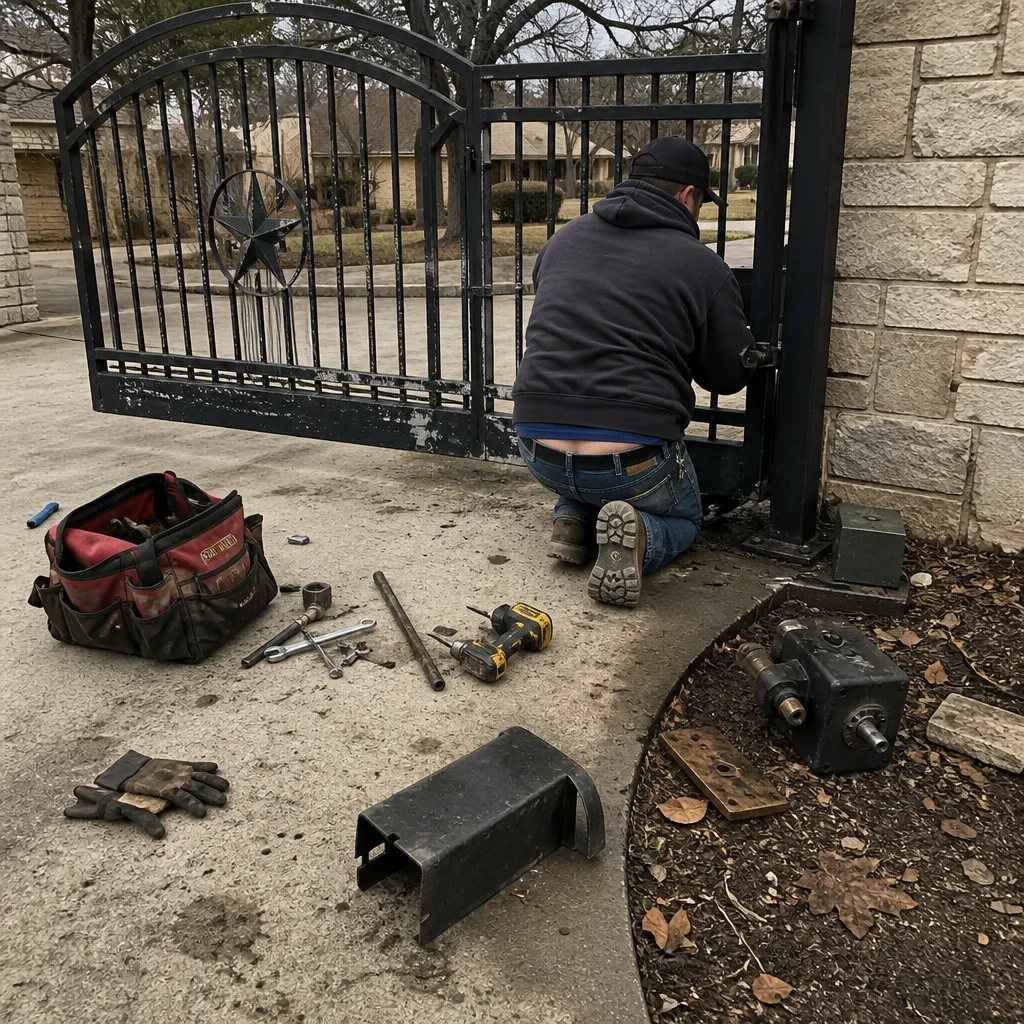 Before
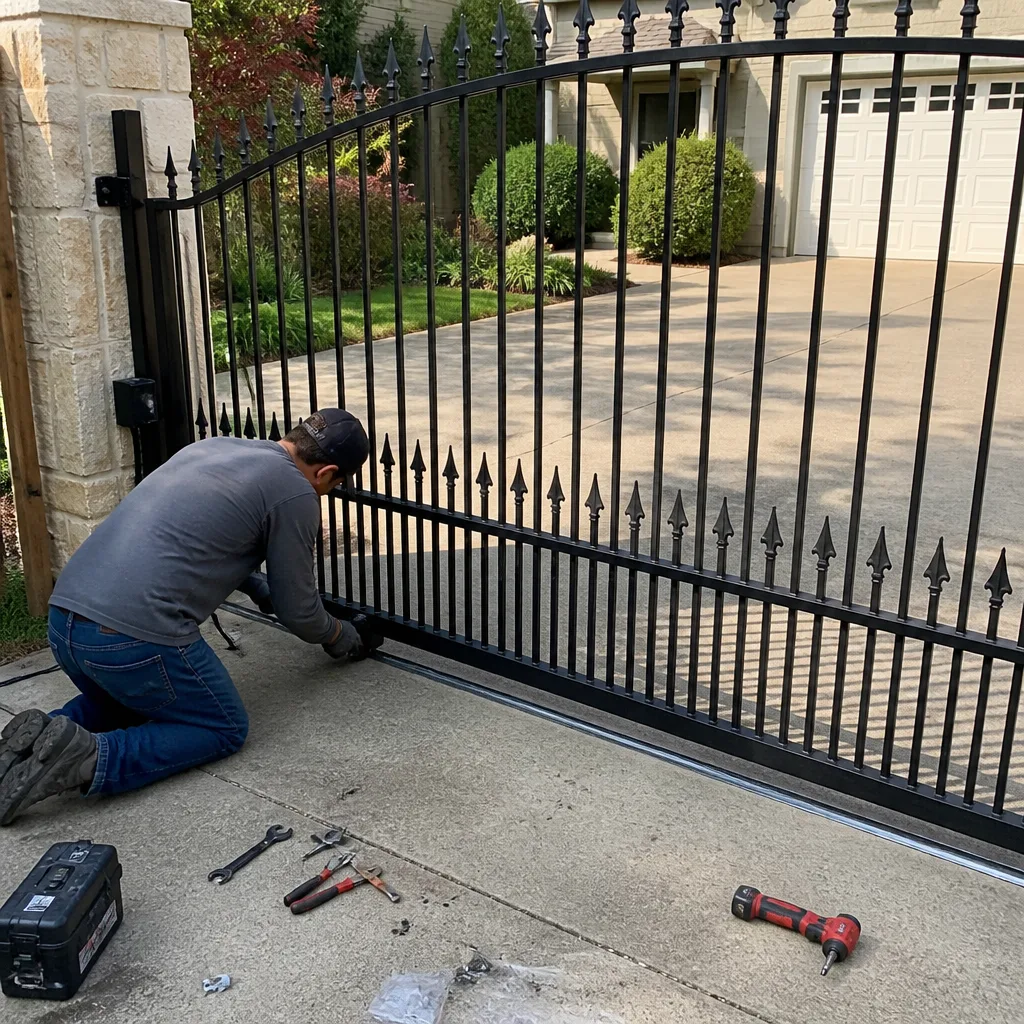 After
After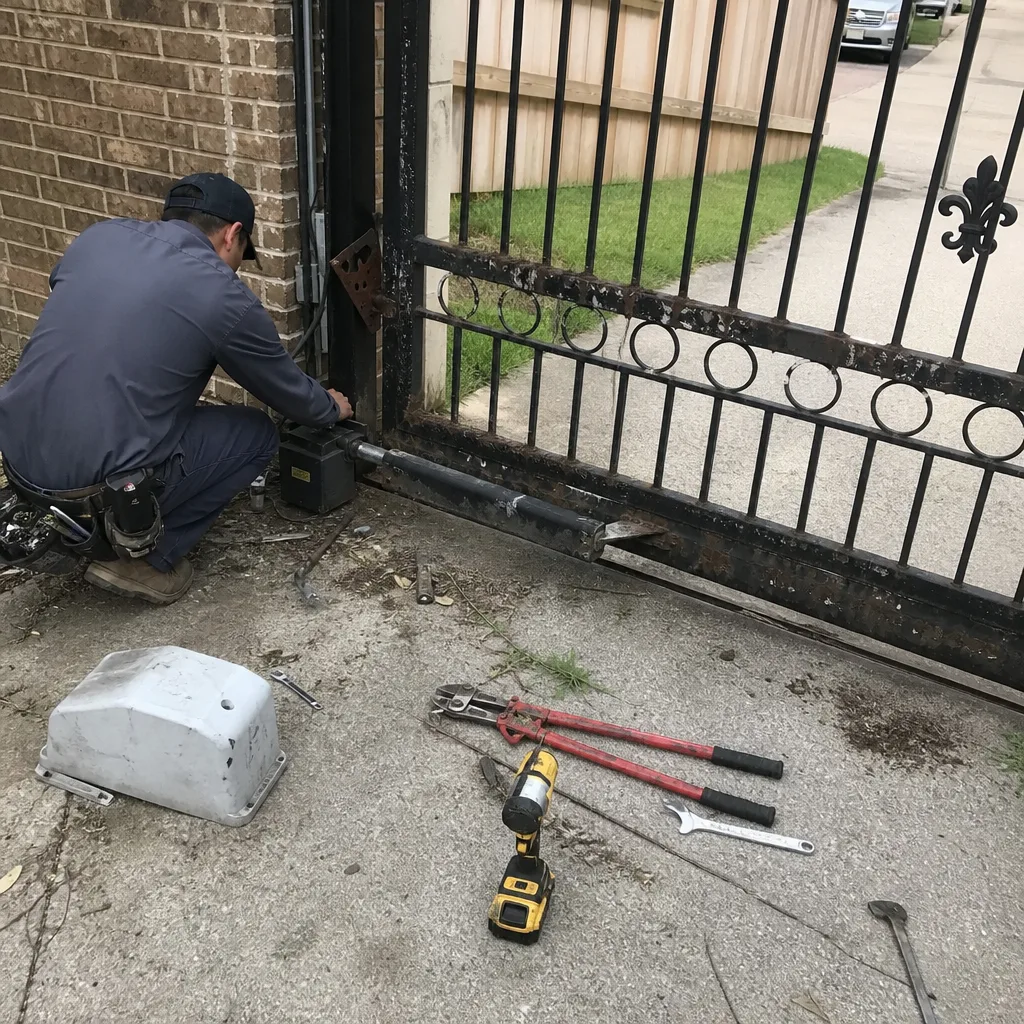 Before
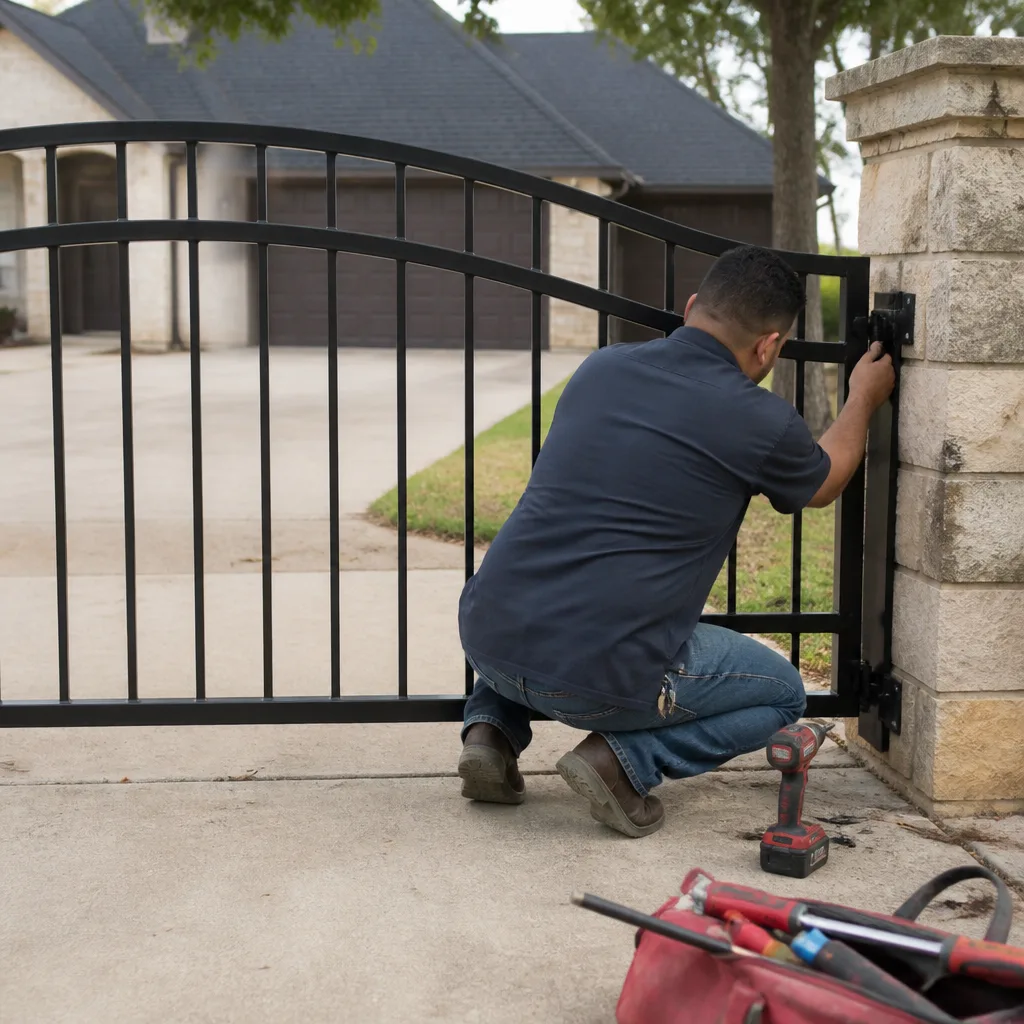 After
AfterReplacement Cost & What’s Included
A single Linear roller replacement in Fort Worth generally lands between $185 and $240 installed. A full hinge and roller rebuild, where we replace both hinge plates, pins, bushings, and both rollers, runs $340 to $420 on most residential gates. Where you fall depends on the roller size, whether the hinge plates are weld-on or bolt-on, and whether the track itself has any wear we need to address at the same time. You’ll see the exact number in writing before we touch anything. That’s how every Latch and Post job starts: a written price, agreed to before work begins, no fine print. The parts and labor are covered by our 365-Day Done Right Promise, which means if the repair isn’t right, we make it right, no argument. We’re led by Cody Beckman, and the standard we hold ourselves to is that you should understand exactly what you’re paying for and why.
DIY or Call Us?
You can absolutely diagnose which part is failing yourself. Grab the gate at the latch corner and lift. If it moves upward more than a quarter inch, the hinge is worn. Roll the gate by hand from the operator attachment point and feel for roughness or listen for grinding, that’s the roller. Those checks are safe and they’ll tell you what’s wrong. The repair itself is where we’d recommend a trained technician, because Linear gates carry a lot of weight, and a gate that’s supported only by a worn hinge can shift when you unbolt it. If it tips, it’s not a stubbed toe, it’s a serious injury. We also do something on site that’s hard to do in a driveway: we check the track alignment and the operator’s force settings after the new parts go in, because a fresh roller on a misaligned track just wears out again in six months. If you’re in Fort Worth and want it done once, call (682) 841-5749. We’ll tell you over the phone whether it sounds like a hinge, a roller, or something else entirely.
FAQs
In this climate, a Linear roller typically lasts 5 to 8 years and a hinge bushing 8 to 12, but that assumes the gate was properly installed and isn’t fighting a misaligned track. Fort Worth’s summer heat aging the nylon and the occasional hard freeze working against the metal pinch points shorten both. Call (682) 841-5749 and we’ll tell you what’s realistic for your specific gate.
Rollers are replaced, not repaired, because the bearing and the wheel face wear together. Hinges can sometimes be salvaged with a new bushing and pin if the plate itself is still solid, but if the bolt holes are wallowed out or the plate is bent, replacement is the honest fix. We’ll show you the wear before we recommend anything.
A single roller swap takes about 45 minutes. A full hinge and roller rebuild on a standard residential Linear gate runs 90 minutes to two hours, plus the time we spend checking track alignment and operator force settings. We’ll give you the time window when you call.
We stock Linear-compatible rollers in the common 2-inch, 3-inch, and 4-inch sizes and the hinge plates for the most common Linear frame patterns on our trucks. If your gate needs a less common spec, we can typically have it in hand within one to two business days. We’ll tell you before we schedule anything.
Yes. We’re factory-trained on the brands families actually own, including LiftMaster, Mighty Mule, Ghost Controls, FAAC, BFT, Viking, DoorKing, and Elite, in addition to Linear. If your gate isn’t a Linear, the same diagnosis and written-price process applies.
Tell me what the gate is doing, and I’ll tell you what it needs, usually those are two different conversations. If your Linear gate is dragging, leaning, or making noise it didn’t make last year, call us at (682) 841-5749 for a free estimate. A live person answers, and we’ll talk through what you’re seeing before we ever schedule a visit. We’ll show up with the right parts, lay down drop cloths if we need to come inside, and hand you a written price before any work starts.
Written by Cody Beckman, Owner, Latch and Post Gate Repair Fort Worth at Latch and Post Gate Repair Fort Worth, serving Fort Worth and nearby areas.