
Last updated October 17, 2026
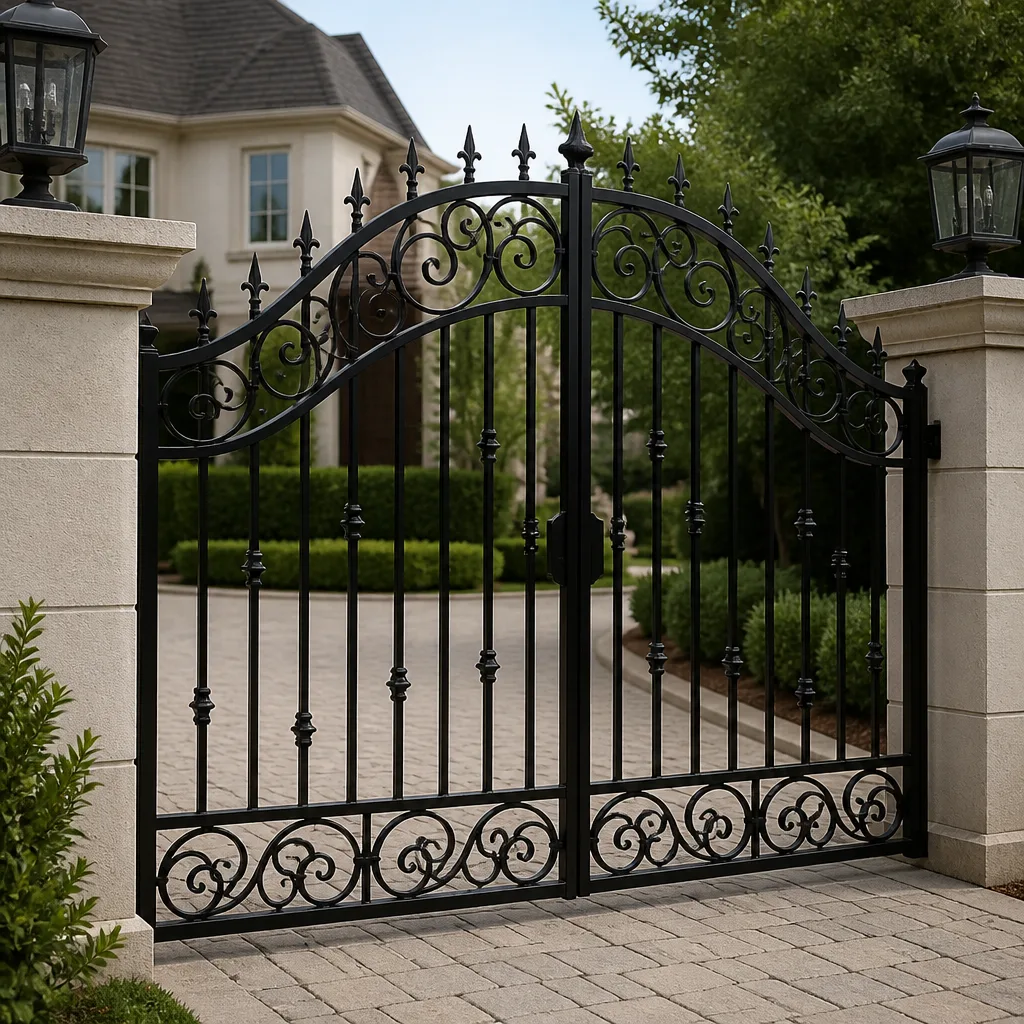 Wrought iron
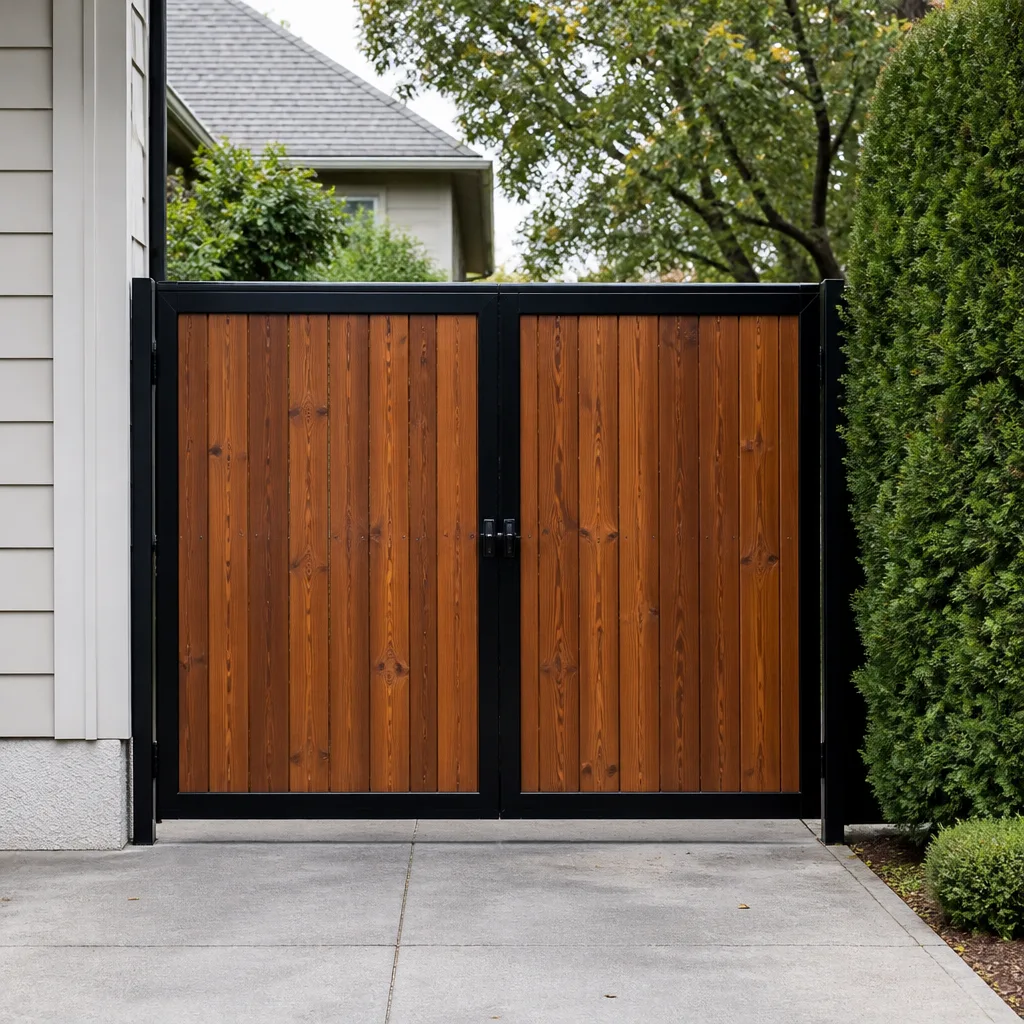 Wood & steel frame
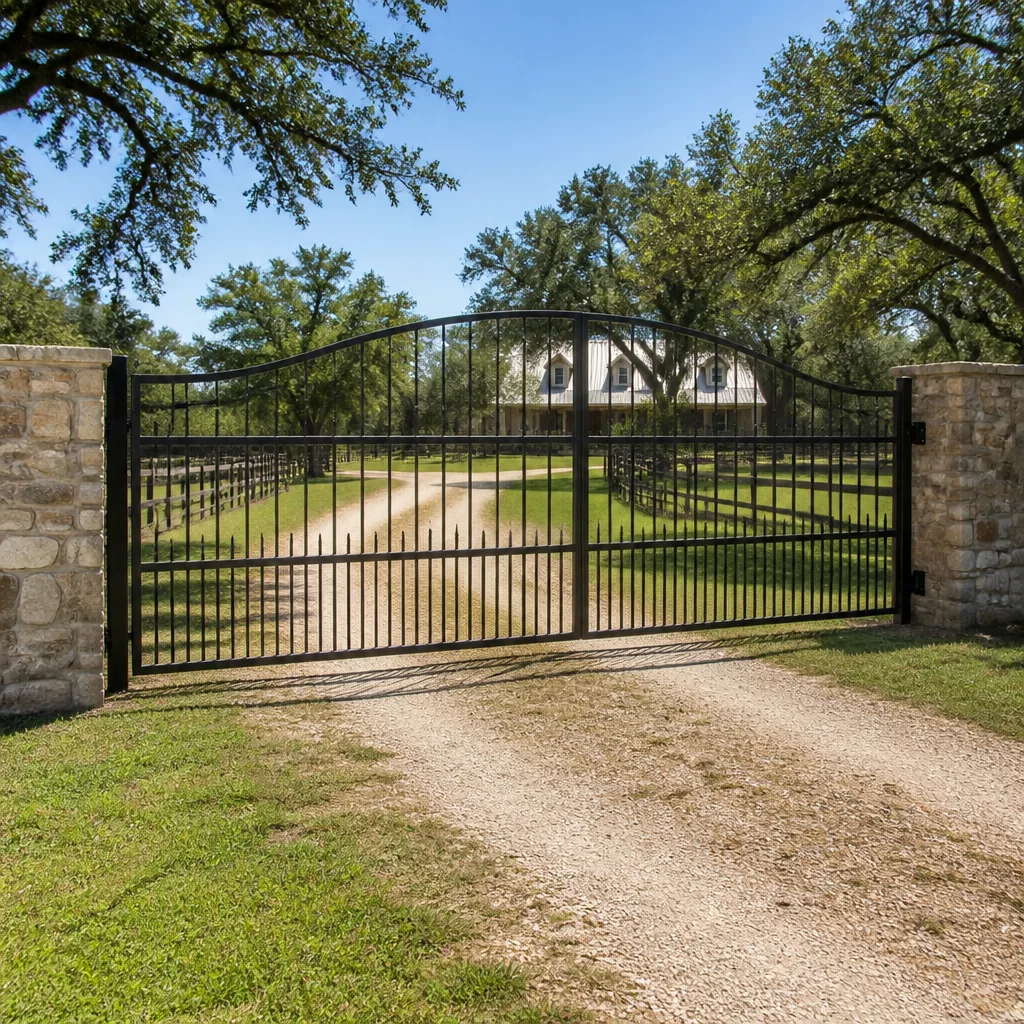 Farm & ranch
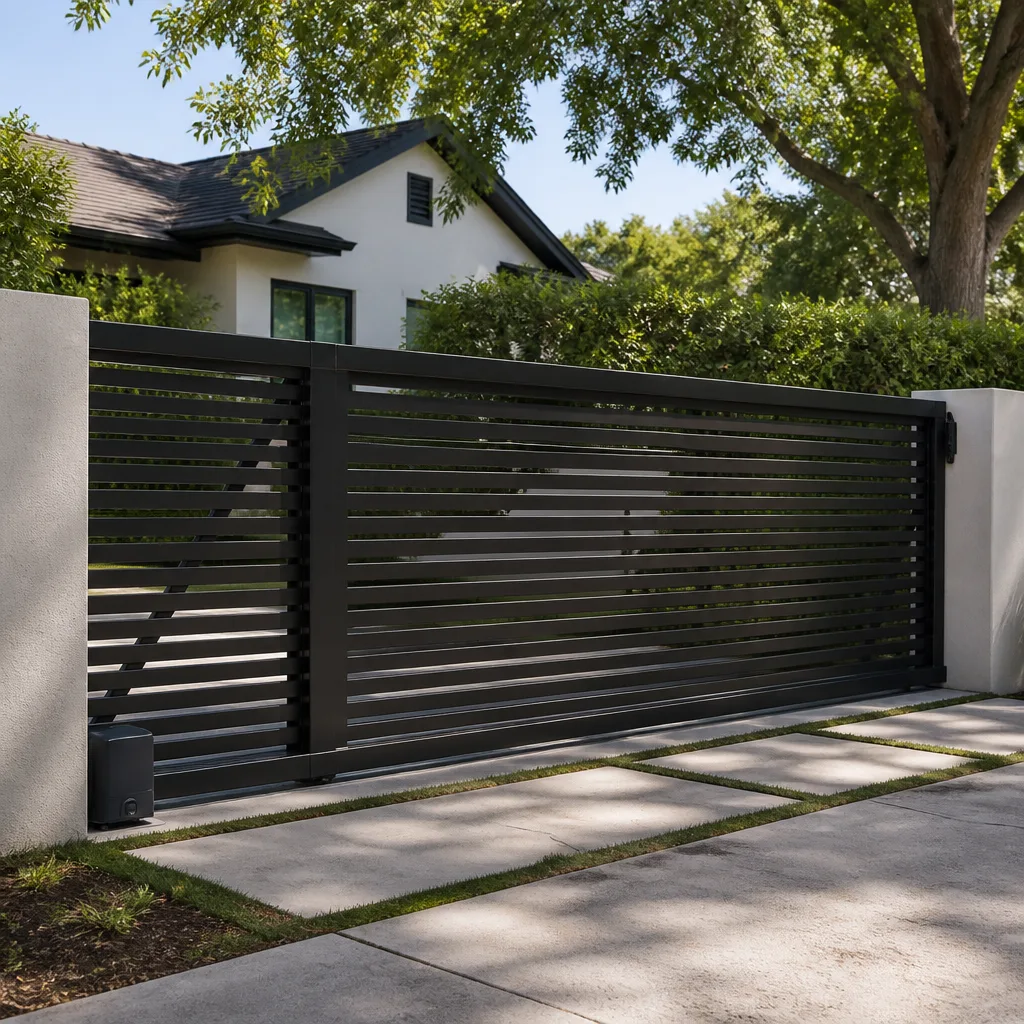 Sliding driveway gates
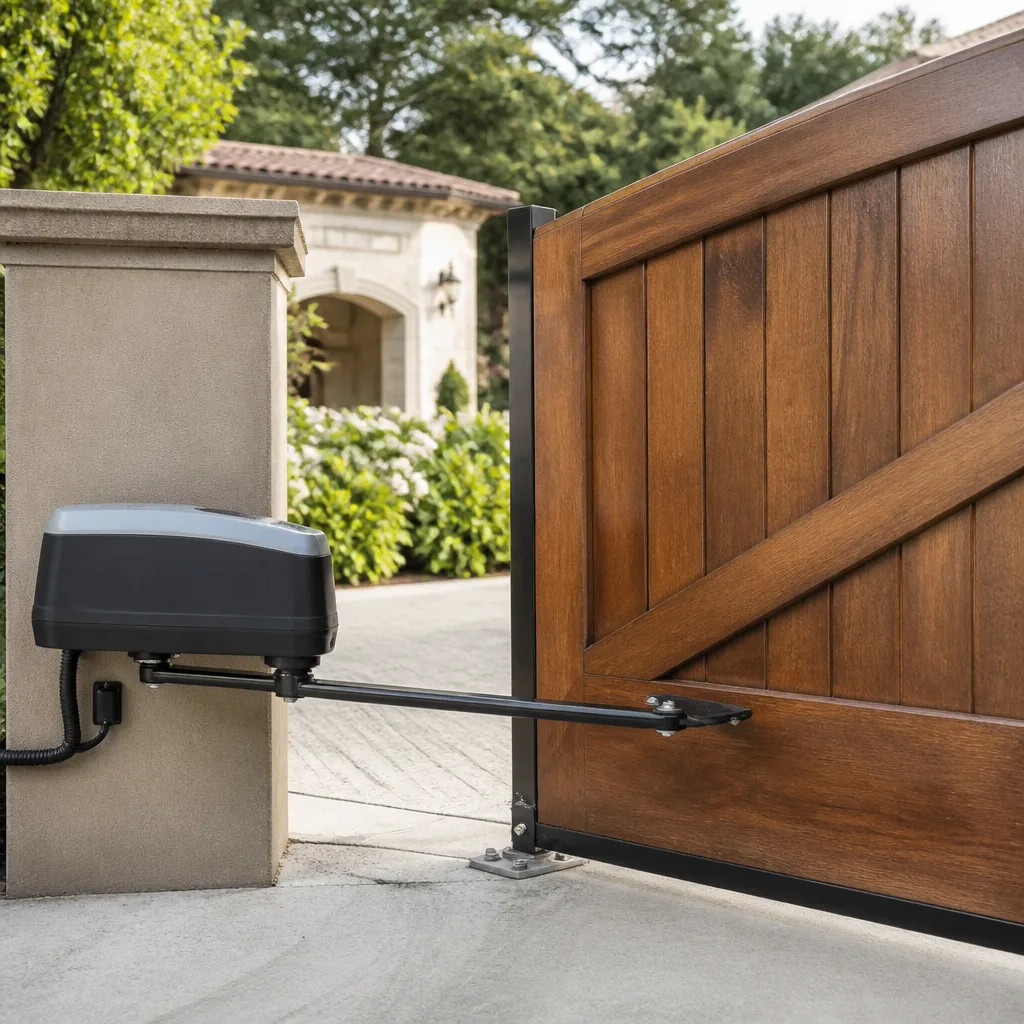 LiftMaster operators
Free on-site gate assessment - hinges, posts, and your LiftMaster or Nice gate operator checked before anything is quoted
The assessment is free and the quote is the invoice.
Get your free estimateSeasonal Gate Repair Care for Fort Worth: Year-Round Homeowner’s Guide
February, not July, is the most destructive month for a Fort Worth gate. A single ice storm can expand metal fasteners, crack cedar boards, and shift gate posts in ways a hundred days of summer heat never does in one event. Most homeowners think about their gate in the peak of summer when the sun is baking it, but the real damage happens quietly during the shoulder seasons and winter, when nobody’s thinking about the driveway at all. This guide lays out a month-by-month care plan built around the way Fort Worth weather actually behaves: two punishing extremes, two short transition windows, and a very specific schedule for each. You’ll learn what to check, when to check it, and what you can safely handle yourself versus what belongs in the hands of a professional like Latch and Post Gate Repair Fort Worth.
Styles & brands we work with
Quick Answer
Seasonal gate care in Fort Worth means scheduling specific maintenance tasks around the city’s two weather extremes: the February ice-storm window and the June-through-August heat dome. The most important checkpoints are late winter (post-shift from freeze-thaw cycles), early spring (wood sealing before UV intensity peaks), pre-summer (electric operator testing before 100°F heat stresses circuit boards), and mid-fall (clay-soil contraction and its effect on post alignment). Most homeowners can handle visual inspections and lubrication, but post movement, electrical issues, and automated-operator problems need a trained Gate Repair technician.
Table of Contents
- Fort Worth’s Real Seasons: Why Gate Care Here Is Different
- January and February: Ice, Freeze-Thaw, and Post Shift
- March and April: Cedar Sealing Before the UV Peak
- May and June: The Pre-Summer Electric Operator Checklist
- July and August: Heat Expansion and What It Does to Hardware
- September and October: Clay Soil Shrinks, Posts Move
- November and December: The Pre-Freeze Inspection
- Seasonal Photo Documentation: Why Dated Photos Matter
- Common Mistakes to Avoid
- When to Call a Professional
- Frequently Asked Questions
- The Bottom Line
Fort Worth’s Real Seasons: Why Gate Care Here Is Different
Fort Worth doesn’t have four seasons. It has two long extremes and two short transitions. From mid-June through late August, the sun pushes temperatures past 100°F for weeks at a time. From late December through early February, the city cycles through freezes, thaws, and the occasional ice storm that coats everything in a half-inch of frozen rain. The months in between, March through May and September through November, are the only windows where the weather is mild enough to actually do meaningful maintenance work on a gate. Scheduling around those peaks, rather than dividing tasks evenly across the calendar, is what separates a gate that lasts twenty years from one that needs a full replacement in eight.
There’s a second factor most guides ignore: Fort Worth sits on expansive clay soil. That soil swells when wet and shrinks when dry, and it moves far more than most homeowners realize. In our experience working on gates across Tarrant County, we’ve seen posts shift a full half-inch over a single dry fall when the soil contracts. When you understand that the ground beneath your gate is moving, the seasonal checklist becomes less about the gate itself and more about catching the movement early, before a shifted post turns into a cracked hinge weld or a gate that no longer latches.
Here’s the broad shape of the year, in the order Fort Worth’s weather actually delivers it:
- January to February: Freeze-thaw cycles stress metal fasteners and expose post movement from the prior fall’s dry spell.
- March to April: The short window for sealing cedar before UV intensity climbs high enough to damage bare wood.
- May to June: The final mild weeks before 100°F heat. Electric operator testing happens now, not in July.
- July to August: Heat expansion. The gate is suriving, not improving. Only emergency work belongs in these months.
- September to October: The second dry period. Clay shrinks, posts shift, and the gate’s alignment needs a careful check.
- November to December: The pre-freeze inspection. Small fixes now prevent ice-storm damage in February.
This framework guides everything below. If you only do four things all year, make them the February post check, the March cedar seal, the May operator test, and the October alignment adjustment. Do those four and your gate will handle the extremes reasonably well.
January and February: Ice, Freeze-Thaw, and Post Shift
The ice storm of February 2021, when Fort Worth went below freezing for 139 consecutive hours, did more cumulative damage to residential gates across Tarrant County than the previous five summers combined. We worked on gates after that storm that had hinges pulled a quarter-inch out of their original alignment, latch bolts frozen into position, and cedar pickets split along their entire length. The mechanics are simple: water gets into tiny gaps in the metal and wood, freezes, and expands with force that no standard fastener is designed to hold.
What should you actually check in these two months? Here’s a practical list that we walk through on every winter inspection call in Fort Worth:
- Inspect every hinge bolt and latch screw. Look for rust forming around the threads, especially on the bottom hinge where snowmelt pools. A flash of orange at the bolt head is the first sign that the freeze-thaw cycle is working.
- Sight along the top rail from the hinge post to the latch post. If the gate’s top edge looks like it’s sagging even slightly, the post itself may have moved. This is the freeze-thaw effect on the concrete footing.
- Lift the gate gently by the latch end. A quarter-inch of play is normal wear. More than half an inch of vertical movement suggests either a worn hinge or a post that’s no longer solid in the ground.
- Check the gap between the gate and the latch post. If the gap is wider at the top than the bottom, or vice versa, the gate has shifted in its plane and the latch is taking uneven force every time it closes.
- Clear drainage around the base of both posts. Standing water that freezes and thaws around the concrete footing accelerates the very shift you’re trying to prevent.
One note about ice and automated gates: if your gate has an operator and an ice storm coats the track or the hinges, do not force it open with the motor. Ice binds the gate in place, and the operator’s gearbox will strip trying to push through it. Disconnect the operator and open the gate manually, then clear the ice with warm water or de-icer before re-engaging. This is a common call for us in January and February, and the fix is usually simple: clear the ice, reassess, and replace a shear pin if the motor already stripped one.
March and April: Cedar Sealing Before the UV Peak
If you own a cedar gate in Fort Worth, March is the month that determines whether its boards survive the next five years. Cedar is naturally rot-resistant, but Fort Worth’s UV intensity from May through September will strip the natural oils from bare cedar within a single season, leaving it gray, cracked, and brittle. Once the wood has grayed and checked, sealing it becomes a restoration project instead of a maintenance task. The window for preventing that starts when daytime temperatures stay above 50°F and ends when they regularly exceed 85°F, which in Fort Worth usually means mid-March through late April.
Here’s the sequence for a cedar gate that’s still in good condition, meaning it has not yet grayed or split:
- Clean the wood on a mild, overcast day. Use a garden hose and a soft-bristle brush, not a pressure washer. Pressure washing tears the soft grain of cedar and forces water deep into the wood where it will take weeks to dry.
- Let the wood dry completely. Two or three dry days in a row is the minimum. Sealing over damp wood traps moisture inside the board, which leads to cupping and splitting from the inside.
- Apply a penetrating oil-based sealer, not a film-forming varnish. Film-forming products trap moisture and peel within one Fort Worth summer. A penetrating sealer soaks in and lets the wood breathe.
- Apply in the morning when the wood is cool, not after a hot afternoon. Cool wood absorbs sealer more evenly. Hot wood evaporates the carrier before the sealer has a chance to penetrate.
- Plan for one coat on the body of the gate and two on any end grain. End grain wicks moisture like a straw and is where cedar gates in Fort Worth fail first, usually at the bottom corners of each picket.
If your cedar gate has already grayed, you can still recover it in March. A light sanding with 80-grit paper opens the pores enough for a sealer to penetrate, and a second coat three weeks later restores most of the wood’s natural color. If the boards are cracked through their thickness, the sealer will not fix them; those boards need replacement before the gate becomes structurally weak. That’s a job we handle regularly, including sourcing cedar that’s already been kiln-dried, which reduces the post-installation cracking Fort Worth homeowners see with big-box fence boards.
May and June: The Pre-Summer Electric Operator Checklist
Electric gate operators fail most often in July and August, but the conditions that cause the failure are set in May and June. The circuit board inside a gate operator is rated for a certain operating temperature, and a Fort Worth summer afternoon pushes the inside of the operator cabinet well past 130°F. A board that’s already running hot because of a failing battery, a dirty photo-eye, or a photo-eye that’s misaligned is the one that burns out during the first 100°F stretch. The fix is not to wait until the gate stops working; the fix is to test the system in May, while the weather is still mild enough to work on it comfortably.
Here’s the pre-summer checklist for an automated gate in Fort Worth. We walk through each of these on an electric gate repair in Fort Worth call, and homeowners can handle several of them themselves:
- Test the battery backup. Unplug the operator or switch off its breaker, then operate the gate through two full cycles on battery power. If it moves slower than normal or stops mid-cycle, the battery is failing. A five-year-old battery, which is the typical age on original equipment, often fails the first time it’s actually needed.
- Clean the photo-eyes. Dust from a dry Fort Worth spring coats the lenses and reduces their effective range. Wipe them with a dry microfiber cloth, then test the safety reversal by holding an object in the beam path. The gate should stop and reverse.
- Check the loop detector sensitivity. If your gate is triggered by an in-ground loop, the sensitivity setting matters as soil moisture climbs from spring rain. A loop set too sensitive can be false-triggered by bikes or even a light car parked near the exit loop.
- Inspect the chain or belt tension on slide gates. Heat expansion in July will tighten a chain that was already tight in May. Set the tension to the manufacturer’s specification now, not in August when the chain is under full heat load.
- Clean the operator cabinet and check the cooling vents. Dust and leaves block the small ventilation ports on the cabinet, and the operator’s circuit board relies on airflow to stay under its maximum operating temperature. A blocked vent is a slow-motion heat death for the board.
- Note the board’s date and model number. Most operator boards last 8 to 12 years in Fort Worth’s climate. If yours is past that age and you’re seeing intermittent problems, the board is the likely culprit, and a replacement before a full failure is often the cheaper path than an emergency call in August.
Most of the operators we service in Fort Worth are LiftMaster, Viking, Ghost Controls, DoorKing, Elite, FAAC, BFT, Linear, or Mighty Mule. Each has slightly different settings for loop sensitivity and force adjustment, and that’s one of the reasons a factory-trained technician is worth the call even when you could technically turn the screw yourself. The wrong force setting on a Viking operator can cause the gate to crush into an obstruction rather than reverse, which is a safety issue on a driveway where kids play.
July and August: Heat Expansion and What It Does to Hardware
The gate is now in survival mode. Fort Worth’s July and August heat pushes surface temperatures on metal gate frames past 150°F, far above the point where steel and aluminum expand measurably. That expansion changes the geometry of the entire gate. A gate that latches perfectly in April may bind at the latch post in July, simply because the metal frame has grown a quarter-inch and the gap that used to be there is gone. The same expansion squeezes the bearings in a slide gate’s rollers and tightens the chain on a slide operator, which is why pre-setting chain tension in May matters so much.
What can you actually do in July and August? Not much, and that’s the point. The heat is a period to observe, not to act, unless something breaks outright. Here’s what to watch:
- Watch for the gate starting to drag or bind at the latch. If the gate was fine in June and suddenly needs a lift to close in July, that’s thermal expansion, and it will likely ease off when the weather cools in September.
- Watch for the operator’s thermal overload. If the gate stops halfway and needs a cool-down period before it works again, the operator’s motor or board is hitting its thermal limit. This is common on older DoorKing and Elite units that were already running warm in May.
- Watch for wood gates that have begun to cup. The dry side of a cedar board in full sun loses moisture faster than the shaded side, and the board curves. This is cosmetic, not structural, but it tells you the wood is drying out faster than it should.
- Watch for loose fasteners. Heat expansion and contraction over multiple days works fasteners loose. A quick check of the hinge screws and latch plate screws takes five minutes and saves a sagging gate in September.
If your gate binds in July and it’s a metal gate, do not file or grind the latch plate to make it fit. The gate will shrink again in October, and the gap you created in July will be a rattling, sagging gap by Thanksgiving. If the binding is severe enough to prevent the gate from closing, call us. We can adjust the hinge alignment or shim the latch plate in a way that holds through the seasonal cycle, rather than solving one month’s problem and creating another.
September and October: Clay Soil Shrinks, Posts Move
Here’s the Fort Worth-specific issue that catches most homeowners off guard: the clay soil beneath your gate posts shrinks dramatically during the September-October dry period, and the posts move with it. This movement changes the gate’s alignment in ways that start subtle and worsen through the winter. A gate that closes smoothly in August can be catching on its latch by Halloween, not because the gate changed, but because the post it latches against has tilted a fraction of an inch away from it.
This is the season to check post alignment carefully. Here’s the method we use on every gate repair in Fort Worth visit during the fall:
- Drop a plumb line or use a long level against each post. Measure the deviation from vertical at the top of the post. More than 3/8 inch of lean over a 6-foot post is worth investigating.
- Measure the gap between the gate and the latch post at three points: top, middle, bottom. If the three measurements differ by more than a quarter inch, the gate or the post has shifted.
- Check the concrete footing at the base of each post. Look for a visible gap between the soil and the concrete, or between the concrete and the wood. A gap that appears in October is the soil contracting away from the footing.
- Operate the gate through a full cycle and listen. A creak that wasn’t there in August, or a scrape at a specific point in the arc, tells you the gate is no longer in its original plane.
The repair, when movement is caught early, is usually straightforward: dig down beside the footing, pour new concrete to re-set the post, and re-align the gate and latch. When movement goes unaddressed, the gate’s weight starts to work against the tilted post, and the post’s lean accelerates over the winter as freeze-thaw cycles push the footing harder. We’d rather re-set a post in October for a few hundred dollars than replace a fallen gate and a cracked post in February, and that math is why the fall inspection exists.
November and December: The Pre-Freeze Inspection
By November, the window for doing comfortable outdoor work is closing. The days are short, the nights are cold, and the first freeze is usually weeks away. This is the time for the final pass before winter: tighten everything, lubricate everything, and make the small fixes that February’s ice would turn into big failures. Fort Worth gates that get this November once-over can usually ride out the ice season. Gates that don’t are the emergency calls we field in January when a latch that was already stiff has now frozen solid.
- Tighten every accessible fastener. Hinge bolts, latch screws, bracket bolts on the operator. A half-turn now is a whole lot easier than a stripped-out screw in February.
- Lubricate hinges, latch bolts, and slide-gate rollers. Use a silicone or lithium spray, not WD-40, which washes out in the winter rain and leaves the metal unprotected. Lubricating before the cold arrives means the gate moves freely when the operator is fighting the cold’s extra resistance.
- Address any latch that’s already sticking. A latch that binds in November will be frozen in February. If cleaning and lubricating doesn’t free it, replace it now. Most standard gate-latch replacements run between $120 and $280 depending on the latch type, and you’ll see the exact number in writing before we touch anything.
- Set the operator’s force setting one notch higher for the winter. Cold metal and stiff grease increase the force required to move the gate, and a gate that trips its safety reversal in January is a gate that stops halfway and refuses to budge. This adjustment is specific to the operator’s brand and model; if you’re not certain how to make it on your LiftMaster or Ghost Controls unit, it’s a five-minute phone call.
- Drain and cover any exposed wiring connections. Water getting into the low-voltage control wires is a persistent Fort Worth winter problem. Check that all wire nuts are inside a junction box and the box’s cover is on tight.
This is also the season to schedule a full gate installation in Fort Worth if your existing gate is at the end of its life. The installation crews work through the winter, but the ground is softer in November than it will be in February, and digging post holes before the ground hardens is a materially better experience for everyone involved. If you’re already seeing rust through the frame, cracked welds, or a gate that sags more than an inch, replacing it before the ice season is the better economic choice.
Seasonal Photo Documentation: Why Dated Photos Matter
Every homeowner in Fort Worth should keep a folder of dated gate photos. It takes two minutes per season and it changes the entire diagnostic conversation when something eventually goes wrong. A photo from October showing a clean, straight gate, followed by a photo from February showing the same gate sagging, tells us the problem is weather-related and recent. A gap that existed in March and is still there in July tells us something has been failing slowly, not something that just broke in the last storm.
What to photograph, four times a year:
- The full gate, open and closed, from the same standing spot each time. This catches alignment drift before it’s visible to the eye.
- The hinge side, close enough to see the bolts and the gap between gate and post. This catches hinge wear and post movement.
- The latch side, close enough to see the alignment between latch and striker plate. This catches the post movement that causes latch failure.
- Any wood surfaces, especially the bottom corners of cedar pickets and any knots. This catches cracking and rot before the board fails.
- The operator, including any visible wiring, the location of the photo-eyes, and the position of the gate on its track. This establishes a baseline for when components are replaced or moved.
- Sealing cedar in July. The sealer flashes off before it penetrates and the wood remains unprotected. March and April are the only months where the temperature range allows proper cure in Fort Worth.
- Ignoring a sticking latch in November. A latch that binds when the temperature drops will freeze solid in an ice storm. Fix it before the first hard freeze, not after you can’t open the driveway gate to leave for work.
- Force-opening an automated gate that’s frozen in place. The operator’s gearbox strips in about two seconds of pushing against ice. The repair doubles in cost because now the gate needs both a mechanical fix and an operator rebuild.
- Greasing the chain with WD-40. It’s a water displacer, not a lubricant. It washes out in the first rain and leaves the chain running dry, which accelerates wear on Viking and Ghost Controls chain-drive units.
- Adjusting the latch in July to fix a binding gate. The bind is heat expansion, not a permanent alignment problem. What fixes July makes October worse when the metal contracts and the gate rattles.
- Skipping the fall post check. Fort Worth’s clay soil moves every fall, and the movement is subtle. By the time the post lean is visible to the naked eye, the footing has lost most of its holding power and the repair is bigger than it needed to be.
- Buying the cheapest cedar boards at the big-box store for a gate repair. Wet, unseasoned lumber from the big-box store shrinks and twists as it dries in the Fort Worth heat, and a board that was straight in the store is a propeller by August. Kiln-dried cedar, which costs more, stays straight.
When a Fort Worth homeowner calls us with a seasonal problem, the quality of the diagnosis depends partly on how well the gate’s history is documented. A dated photo sequence often tells us more in thirty seconds than an hour of on-site inspection. It’s the difference between knowing the poster shifted in January versus knowing the gate has been sagging for eighteen months and the post was fine. We can see exactly what the weather did, and when, because the photos show the sequence.
Common Mistakes to Avoid
When to Call a Professional
Some seasonal work a homeowner can do with a wrench, a level, and a phone camera. Some work belongs in the hands of someone who does it daily, and drawing the line correctly saves money and avoids injury. See our DIY vs Professional Gate Repair: The Fort Worth Homeowner’s Decision Guide for help deciding which is which. Call a professional when the post is leaning more than 3/8 inch, because re-setting a post means digging out the old footing and pouring fresh concrete, and getting the new footing wrong means repeating the repair in two years. Call a professional when the gate’s operator is showing intermittent problems, because the circuit board controls both the motor and the safety reversal, and a board that’s failing can fail in the open or closed position without warning. Call a professional when the gate sags more than half an inch at the latch, because the hinge hardware is now load-bearing in a way it wasn’t designed for, and continuing to use the gate makes the eventual repair more expensive. Latch and Post Gate Repair Fort Worth offers free estimates in Fort Worth, and the written price is in your hands before any work starts. Call (682) 841-5749.
Frequently Asked Questions
A seasonal inspection, which includes the post alignment check, hinge and latch inspection, lubrication, and operator testing, typically costs between $85 and $150 in Fort Worth depending on the gate type and style. Repairs and adjustments that are identified during the inspection are priced separately and in writing before any work begins. Call (682) 841-5749 for an exact quote, estimates are free.
Seal a cedar gate in March or April, when daytime temperatures stay between 50°F and 85°F and the wood is dry enough to absorb the sealer. March through April is the only window in Fort Worth where the temperature stays in the right range long enough for the product to cure properly. Sealing in summer heat flashes the sealer off before it penetrates, and sealing in winter traps moisture inside the wood.
A latch that sticks because of dirt or dry lubrication is a simple fix: clean the latch mechanism and spray it with a silicone or lithium lubricant. If the latch is still sticking after cleaning and lubrication, the alignment is the problem, and forcing a misaligned latch will eventually bend the striker plate and make the repair more expensive. Call (682) 841-5749 for an exact diagnosis, estimates are free.
A full installation from Latch and Post Gate Repair Fort Worth includes removal of the old gate, inspection and replacement of the posts if needed, new hinges and latch hardware, leveling and alignment, and cleanup of the work area, including a photo of the clean-up before we leave. For details on common repairs, read The Complete Guide to Gate Repair in Fort Worth. The written price covers all of it, agreed before any work starts. For an electric gate, the installation also includes the operator, safety photo-eyes, and the power run.
Yes. Our technicians are factory-trained on LiftMaster, FAAC, BFT, Linear, Viking, Ghost Controls, DoorKing, Elite, and Mighty Mule. We test the operator, battery backup, photo-eyes, and loop detector as part of the electric gate repair visit, and we explain the price before we do anything.
Twice a year is the practical minimum: once in late October or early November before the freeze season, and once in May or June before the summer heat. The fall inspection catches post movement from the dry season, and the spring inspection catches the operator and wood issues that summer heat will worsen. Homes with wooden gates or automated operators benefit from a third check in March for the cedar sealing window.
The Bottom Line
Fort Worth gates don’t fail on a calendar schedule. They fail when the soil shifts, the ice freezes, and the sun bakes, and those events happen at predictable times of year that most homeowners don’t think about until the gate has already stopped working. The entire year’s care reduces to four tasks: check post alignment in February, seal cedar in March, test the electric operator in May, and re-check alignment in October when the clay soil shrinks. Do those four and your gate will handle the rest of the year. Skip them and you’ll meet the weather’s extremes the hard way, one expensive emergency call at a time. For more guides & resources, visit our blog.
Written by Cody Beckman, Owner at Latch and Post Gate Repair Fort Worth, serving Fort Worth since 2009.
If your gate needs a seasonal check-up, a repair, or a full replacement, call Latch and Post Gate Repair Fort Worth at (682) 841-5749. A live person answers 24/7, and the estimate is always free, always in writing, and always before any work begins.
See the difference
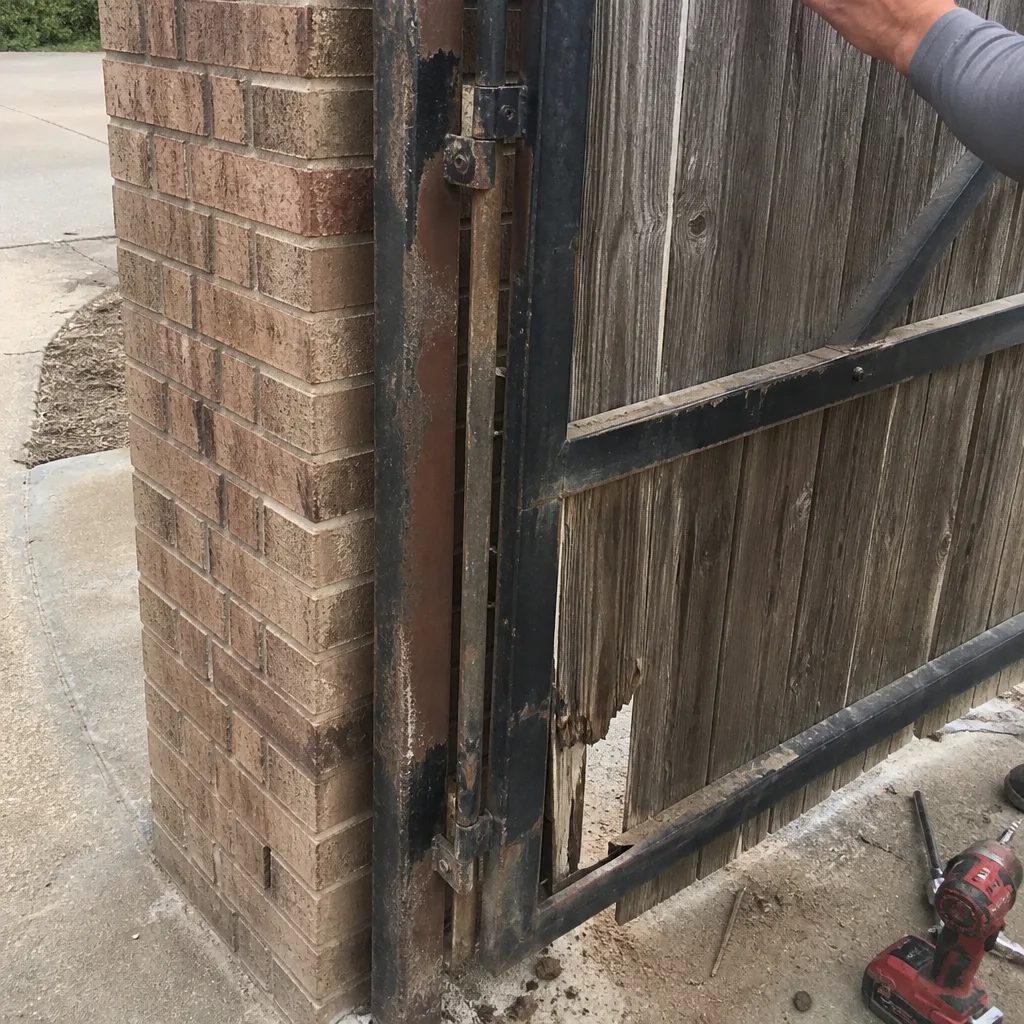 Before
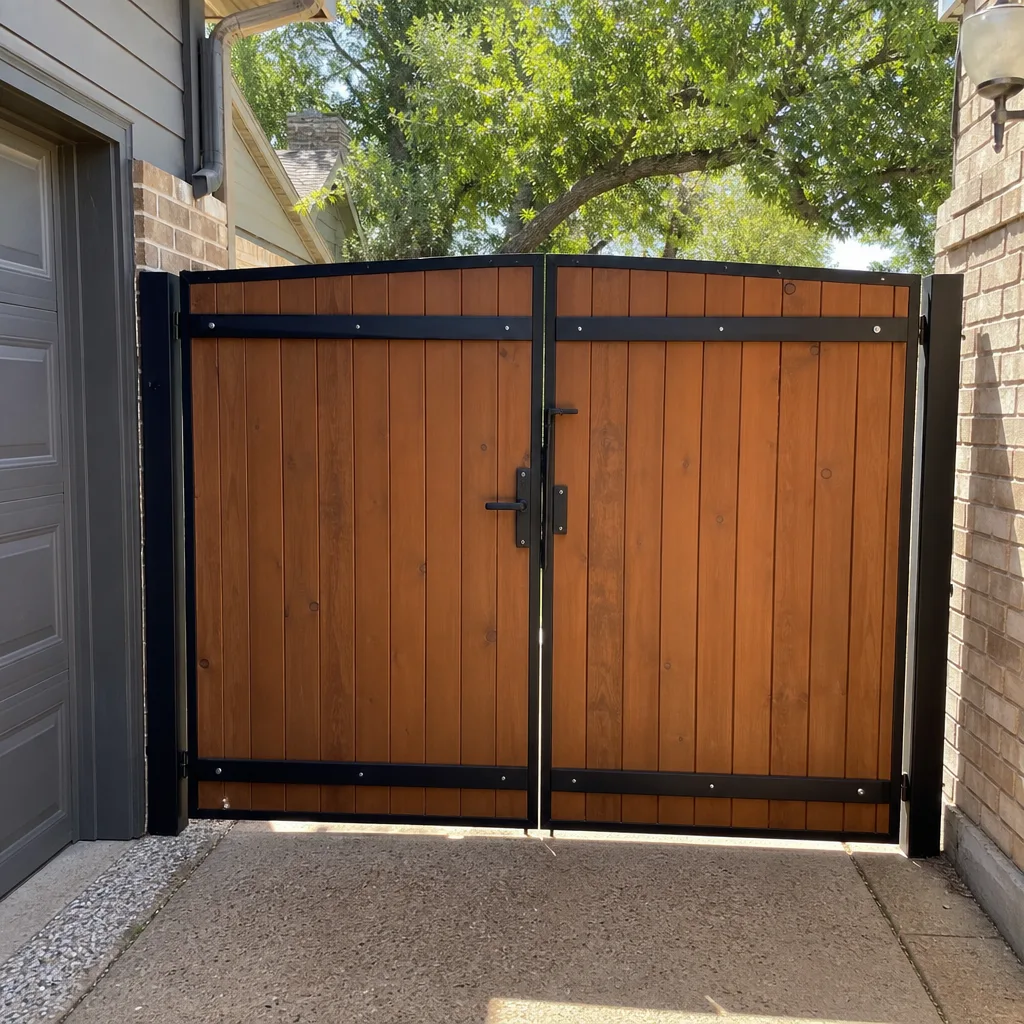 After
After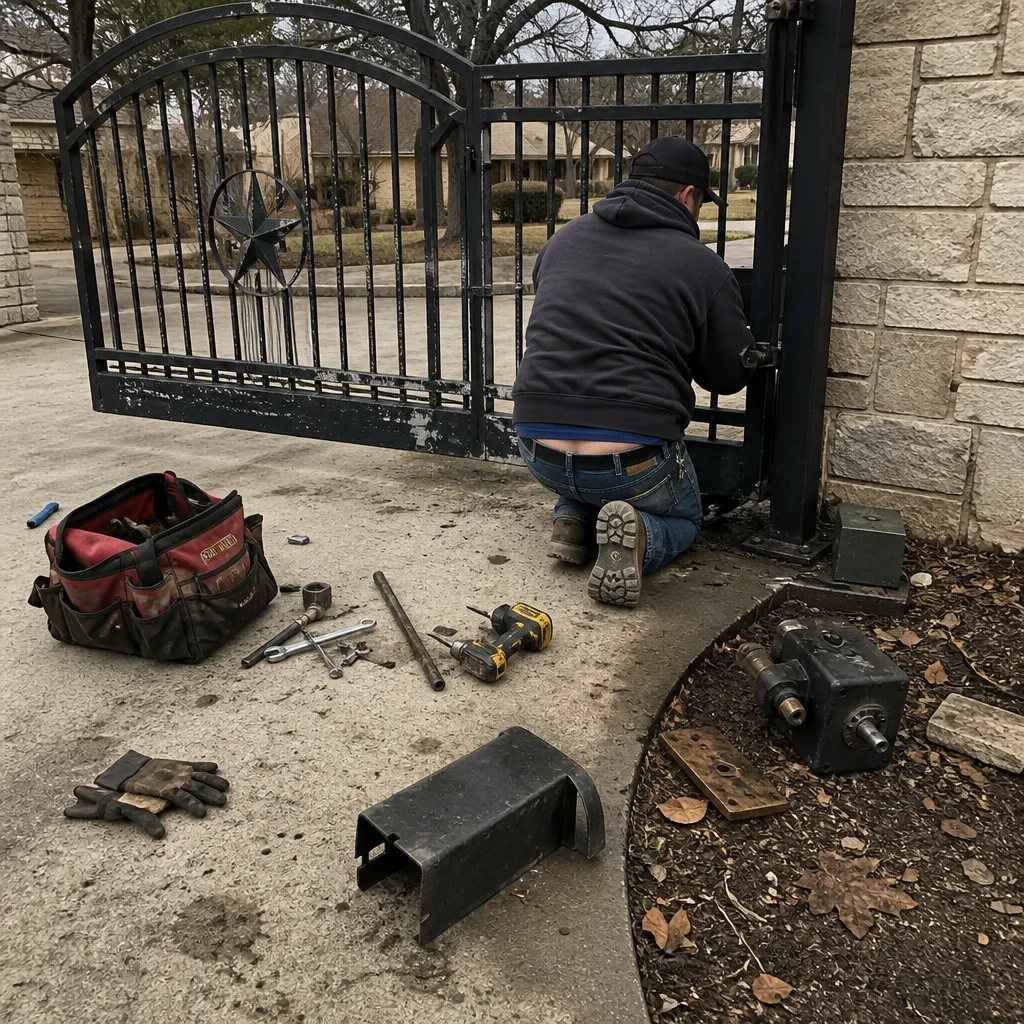 Before
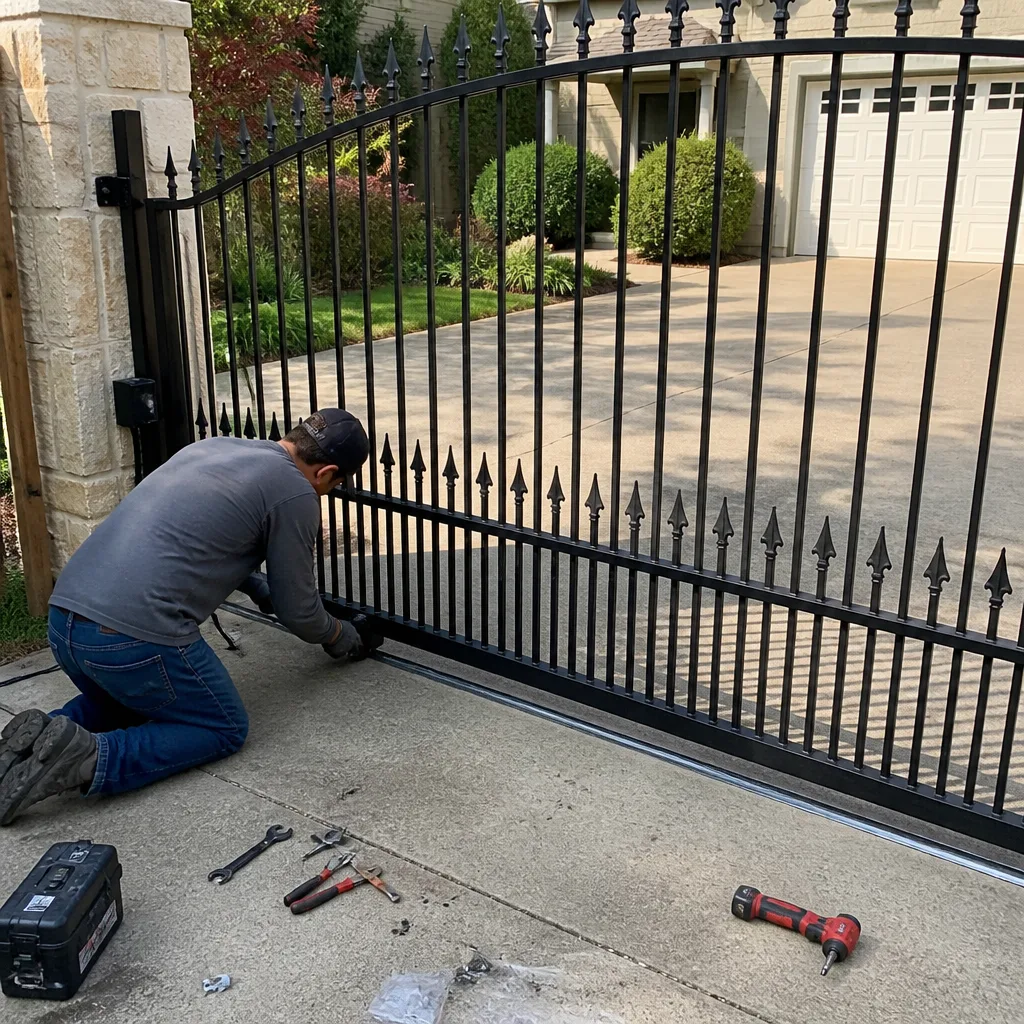 After
After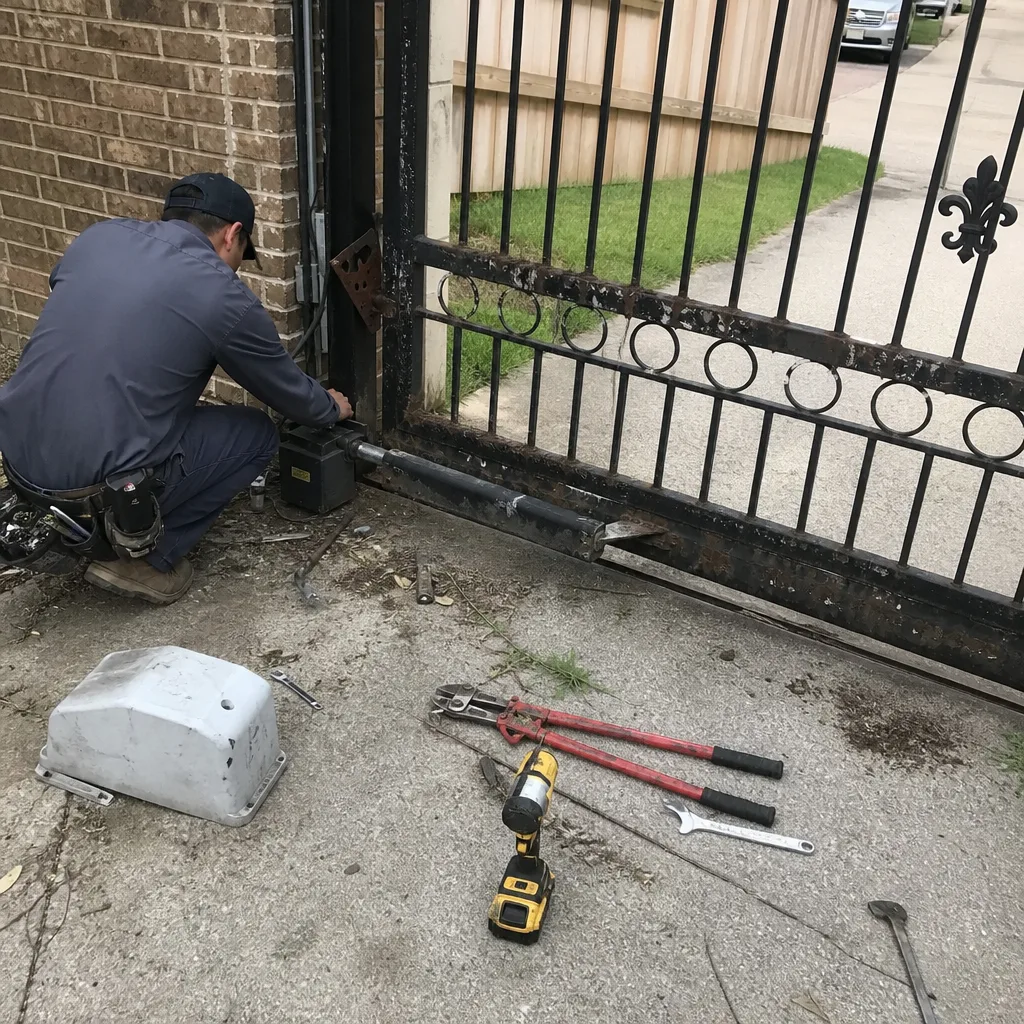 Before
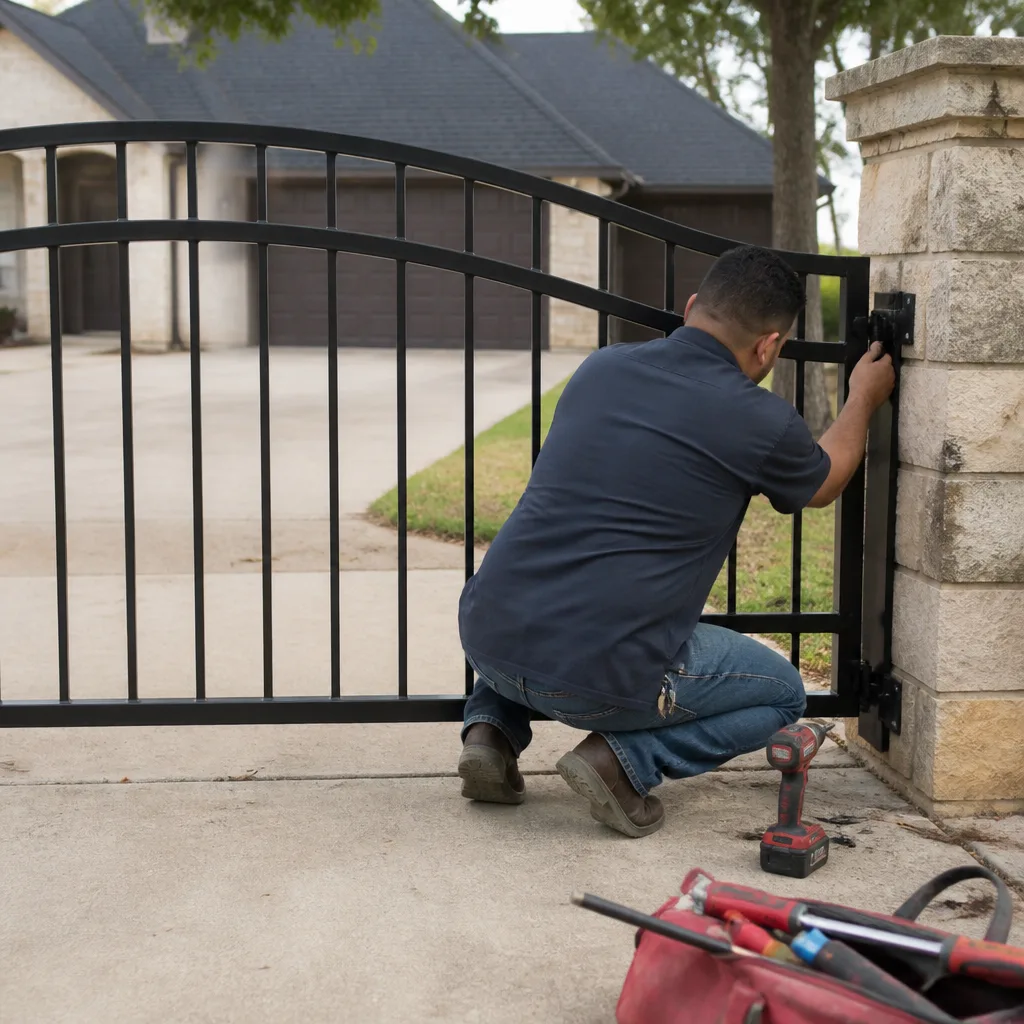 After
After