
Last updated October 17, 2026
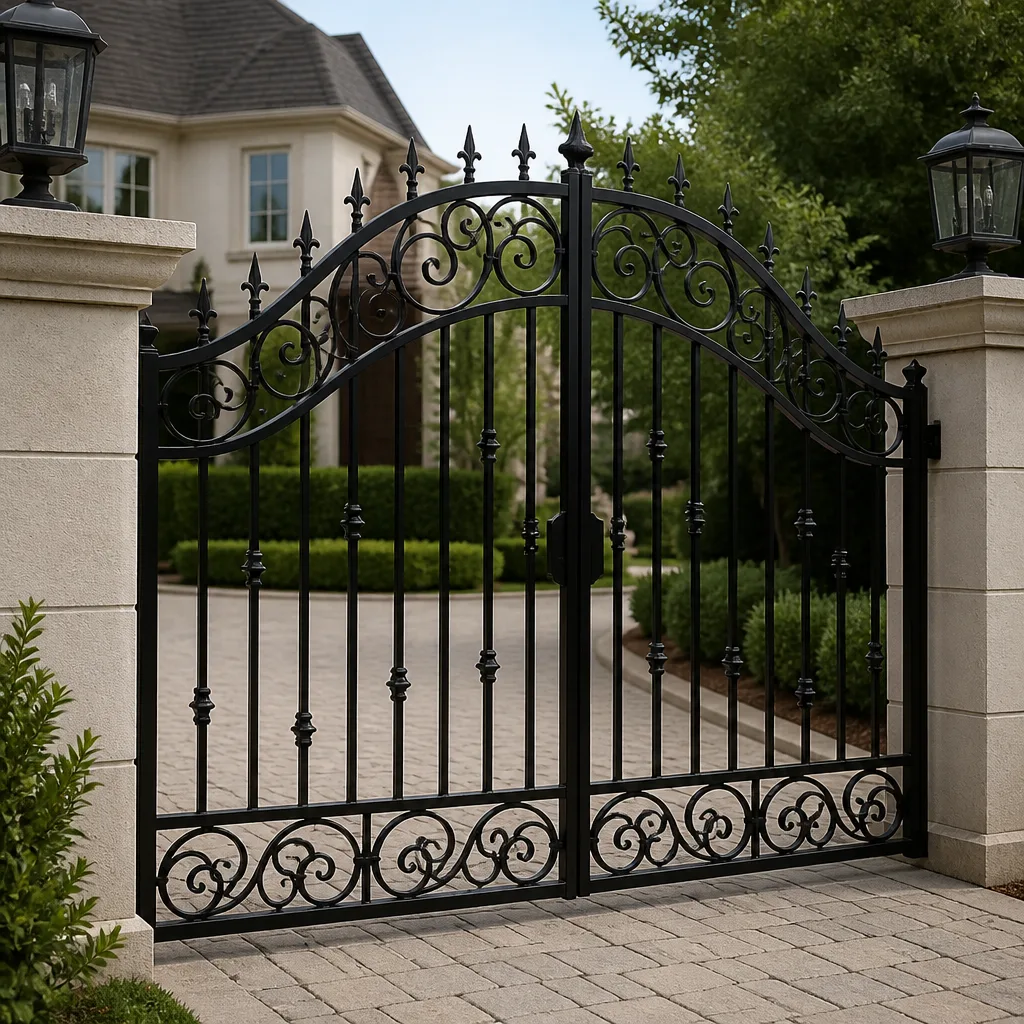 Wrought iron
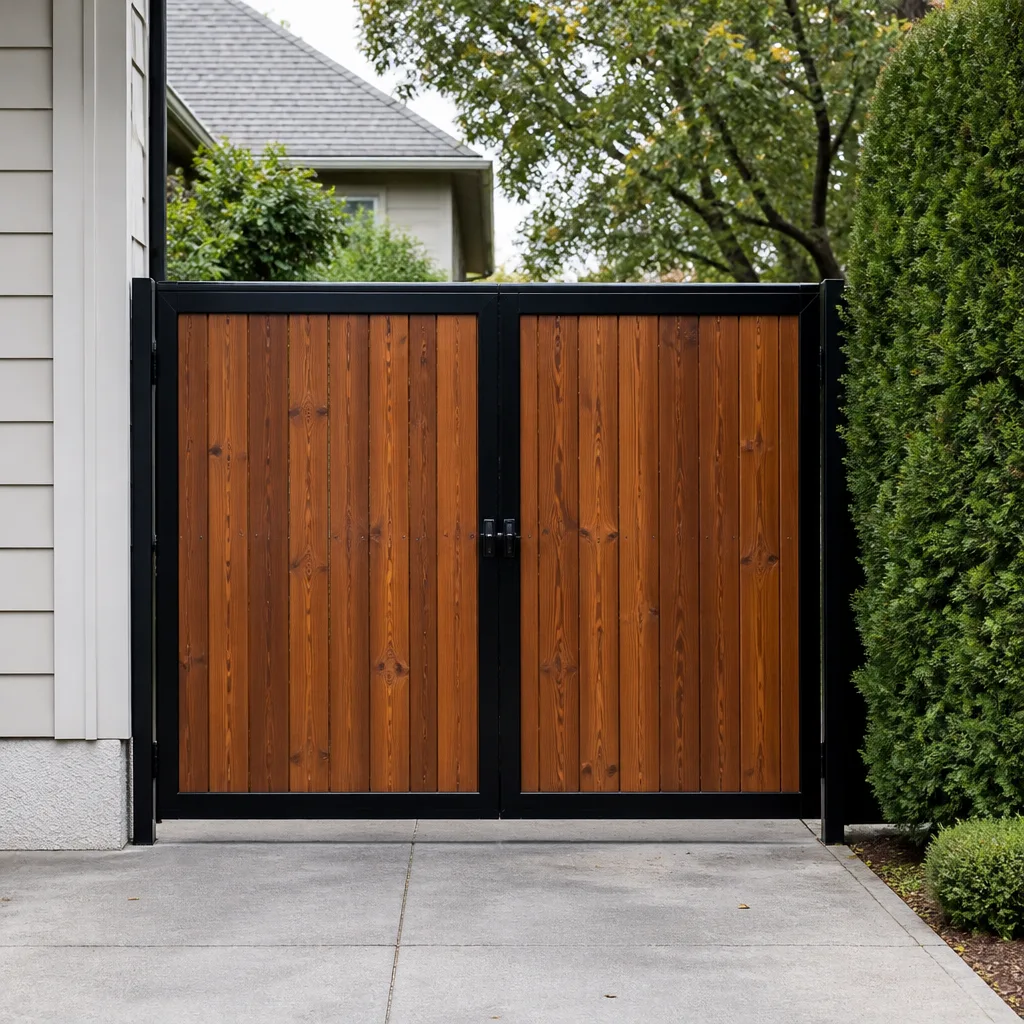 Wood & steel frame
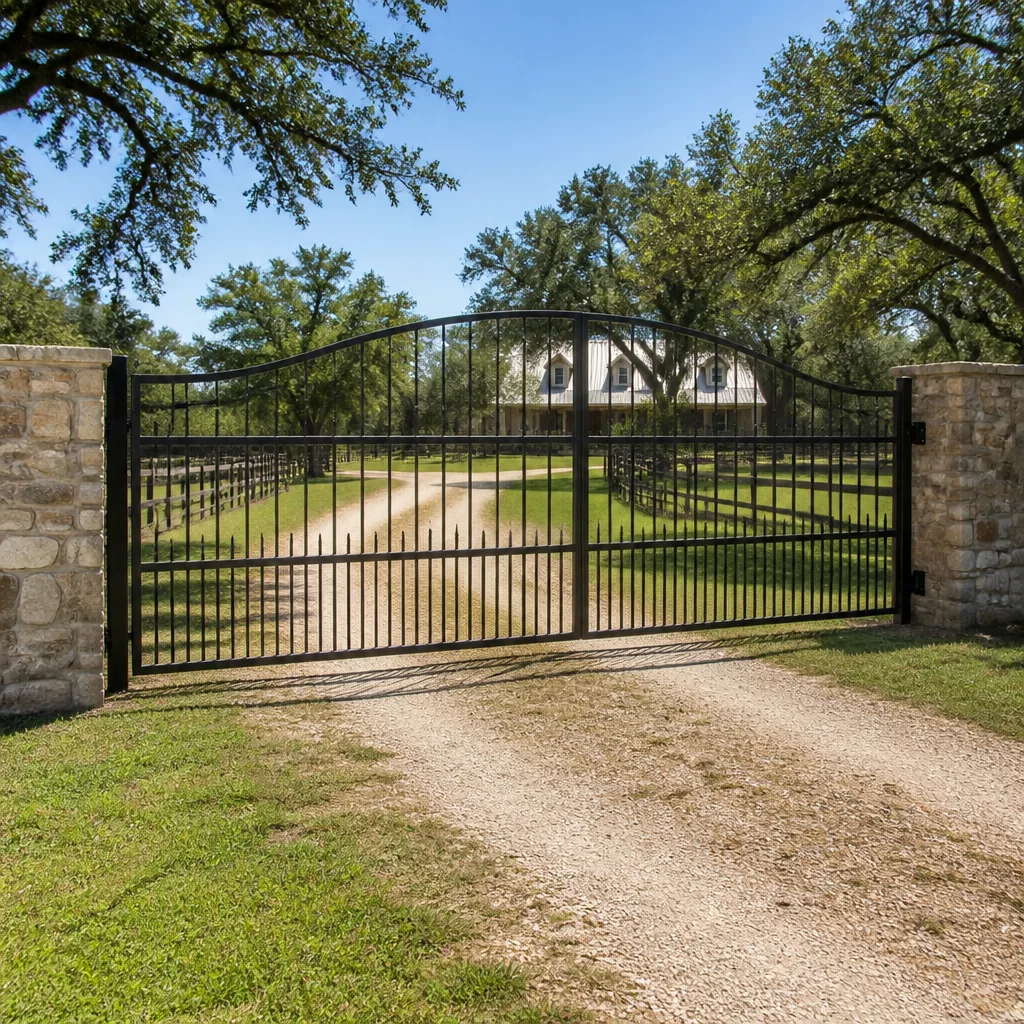 Farm & ranch
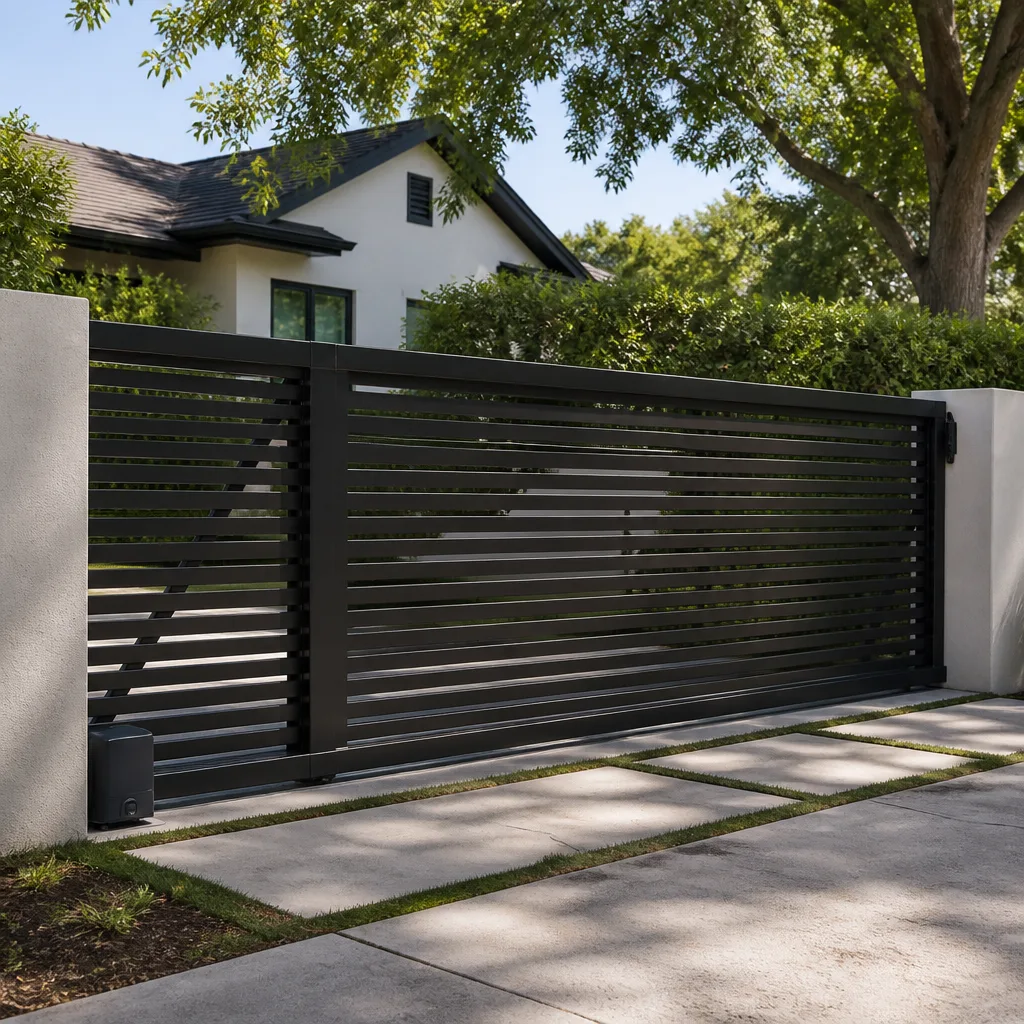 Sliding driveway gates
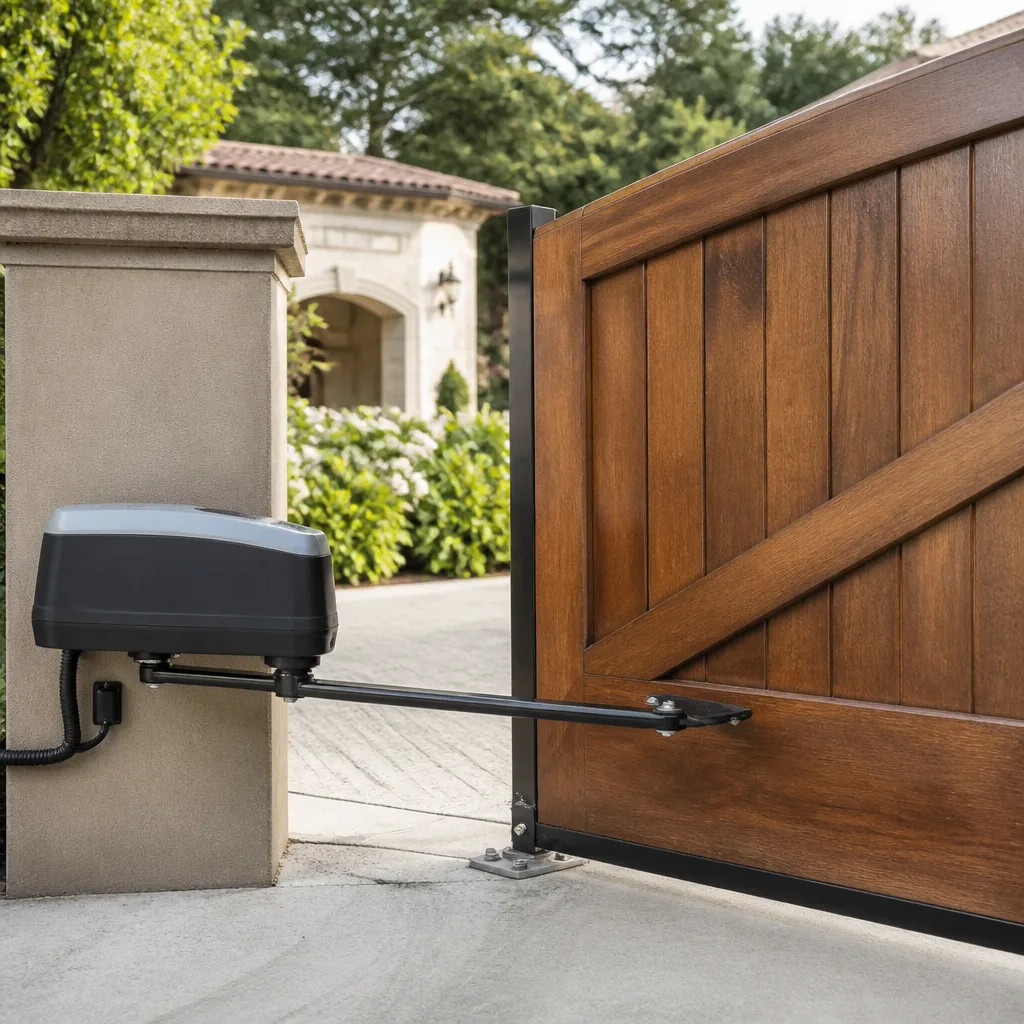 LiftMaster operators
Free on-site gate assessment - hinges, posts, and your LiftMaster or Nice gate operator checked before anything is quoted
The assessment is free and the quote is the invoice.
Get your free estimateThe Complete Guide to Gate Repair in Fort Worth
Here’s the thing most Fort Worth homeowners discover too late: a gate that drags across the concrete usually isn’t a hinge problem. About 60% of the time, it’s a post shifting in the black clay soil that runs through Tarrant County. The clay swells when it rains and contracts during dry spells, moving the post just enough to throw the entire gate out of alignment. Patch the hinge, and the repair fails within a season. Fix the post, and the gate works for years. This guide maps every gate type common in Fort Worth to its most likely failure point, so you can describe the problem accurately before anyone arrives, understand what a fair price looks like, and know exactly what a thorough Gate Repair services should include.
Styles & brands we work with
Quick Answer
Gate repair in Fort Worth typically costs between $180 and $1,400 depending on which system has failed: latches run $180 to $350, hinges $150 to $400, post resets $400 to $1,400, operator repairs $250 to $900, and weld repairs $150 to $500. Most standard repairs on a single gate take 1.5 to 3 hours on site, though post resets can require a follow-up visit because concrete takes time to cure. Call (682) 841-5749 for a written quote before any work begins, with the price agreed on upfront, in writing.
Table of Contents
- The Five Systems That Make Every Gate Work
- How Fort Worth’s Black Clay Soil Breaks Gates
- Which Gate Materials You’ll Find in Fort Worth Neighborhoods
- What Each Repair System Costs in 2026 Dollars
- What a Written, Itemized Estimate Should Look Like
- How the Latch and Post Care Routine Differs From a Standard Visit
- Signs Your Gate Needs Attention Before It Fails Completely
- Common Mistakes to Avoid
- When to Call a Professional
- Frequently Asked Questions
- The Bottom Line
The Five Systems That Make Every Gate Work
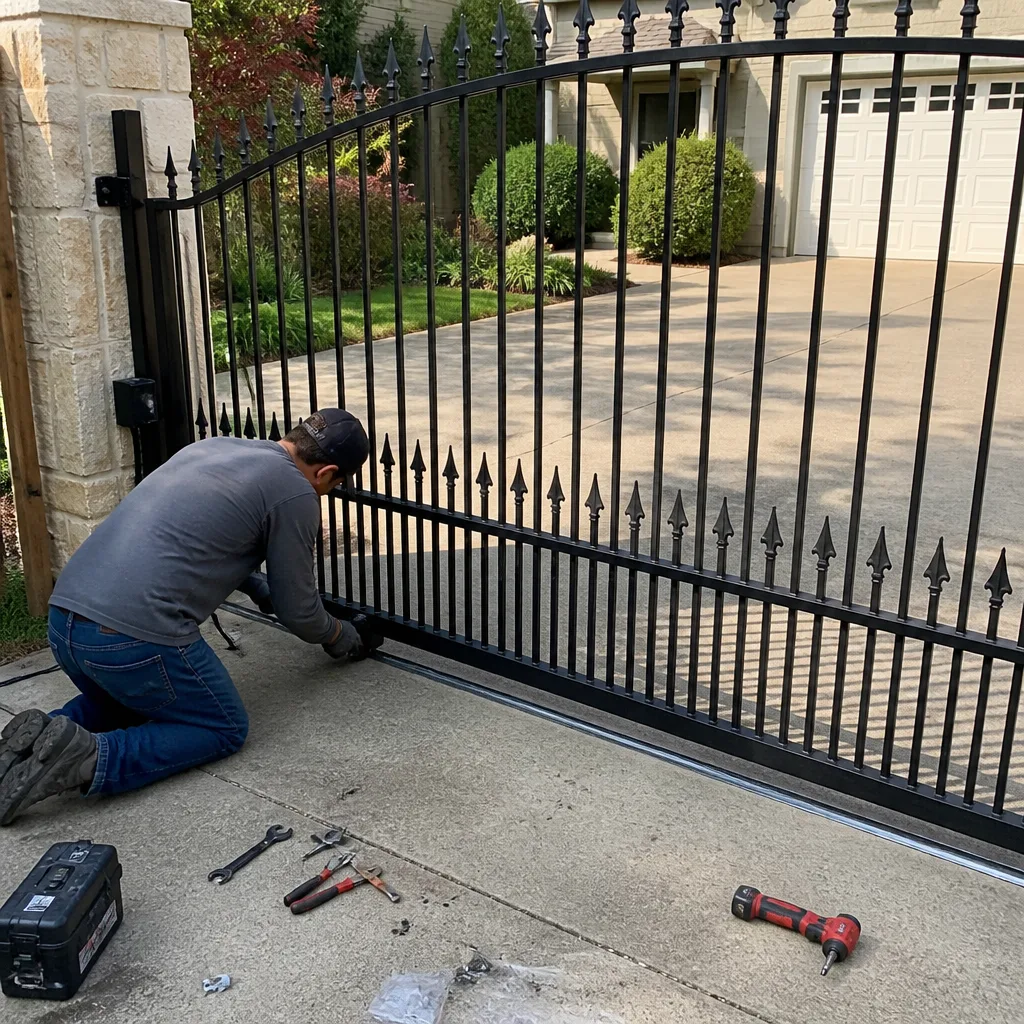
Every gate in Fort Worth, whether it’s a double drive gate in Westover Hills or a simple side yard gate in Wedgwood, runs on five mechanical systems: the latch (what holds it closed), the hinges (what lets it swing), the post (what carries the weight), the operator (what moves it, on electric gates), and the welds (what holds the frame together). When one system starts to fail, it puts extra strain on the others. That’s why a sticky latch often becomes a bent hinge, which then becomes a shifted post. Understanding which system is failing tells you what the repair will actually cost and how long it will last. Here’s a quick breakdown of each system’s job and its most common failure mode.
- Latch: Holds the gate closed. Common failure: spring fatigue, alignment drift, or a bent strike plate from kids or wind slamming the gate.
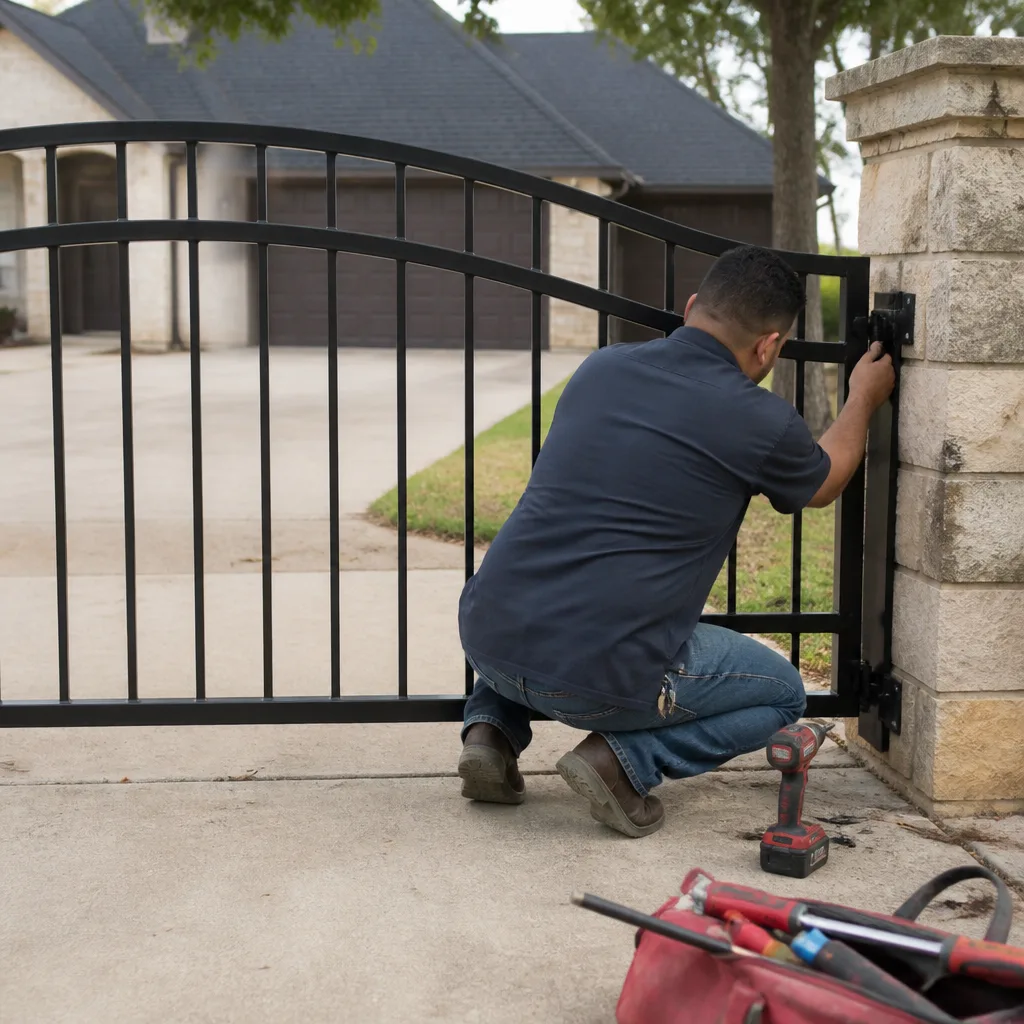
- Hinges: Carry the gate’s weight and allow smooth swing. Common failure: bearing wear, sag from loose fasteners, or corrosion in older iron hardware.
- Posts: Anchor the gate to the ground. Common failure: heave or lean from Fort Worth’s shrinking and swelling clay soil, or rot in older wood posts.
- Operator: The motor and control board on electric gates. Common failure: burnt control boards from power surges, stripped gears, or sensor misalignment.
- Welds: The joints on wrought iron and aluminum frames. Common failure: fatigue cracks at stress points, especially at hinge brackets and latch plates.
Each system has its own personality, and each fails in a way that tells you something if you know what to look for. The next sections walk through each one with specific symptoms, costs, and what a proper fix involves.
How Fort Worth’s Black Clay Soil Breaks Gates
The most overlooked factor in Fort Worth gate repair is the soil under the posts. Tarrant County sits on Vertisol, a heavy black clay that expands dramatically when wet and shrinks when dry, creating cracks in the ground that can run several feet deep. A four-foot-tall iron gate weighs between 150 and 400 pounds. Put that weight on a post set in this soil, and the post moves with the ground. What looks like a hinge problem or a sagging gate is often a post problem in disguise. We’ve seen homeowners pay for hinge replacements twice in a single season because the real issue was post heave underneath the gate.
Here’s the specific sequence that plays out in Fort Worth homes:
- Rain saturates the clay. Heavy spring or fall rains cause the soil around the post to swell, lifting the post a fraction of an inch.
- Dry spells shrink the clay. Weeks of Texas heat cause the clay to contract, leaving gaps around the post. The post shifts laterally or settles unevenly.
- The gate changes position. The latch doesn’t line up, the gate drags on concrete, or the hinges pull away from the post.
- Homeowners patch the symptom. A new hinge or latch gets installed, but the post continues to move, and the problem returns.
The correct repair addresses the post: removing it, re-setting it in a deeper concrete footing, and allowing the concrete to cure fully before the gate is rehung. This often takes two visits, one to dig and set, and one to rehang after curing. If you have a gate that’s worked fine for years and suddenly starts dragging or sticking, the first thing to check is whether the post has moved. Compare the gap between the gate and the post at the top and bottom. If the gap is uneven, the post has shifted.
This is also a reason to hire someone who knows Fort Worth’s soil, not just gates in general. A technician who has worked in Benbrook, Wedgwood, and Arlington Heights understands that a concrete footing needs to be deep enough to get below the active movement zone of the clay, typically 2 to 3 feet, and that drainage around the post matters as much as the post itself. For a deeper look at what full repairs involve, visit our Gate Repair in Fort Worth page.
Which Gate Materials You’ll Find in Fort Worth Neighborhoods
Fort Worth’s gate inventory varies by neighborhood, and the material affects both the failure mode and the repair approach. In older areas like Westover Hills, Fairmount, and Berkeley Place, you’ll find mostly ornamental wrought iron and steel gates from the 1980s and earlier, many with original hardware that’s now 30 to 40 years old. These gates develop weld fatigue and corrosion at the joints, and their original latches were often spring-loaded mechanisms that simply gave out after decades of use. The good news is that iron and steel frames are generally repairable by a skilled welder, and the original posts in these neighborhoods were sometimes set in deeper footings that hold up well, even in the clay.
In Arlington Heights and Crestwood, you’ll see a mix of cedar wood gates and iron, with the wood gates more vulnerable to hinge pull-out and rail warping from moisture exposure. In the newer developments south of I-20 and around Chisholm Trail Parkway, aluminum gates are common. Aluminum doesn’t rust, but it’s softer than steel, so hinge brackets can deform under heavy use, and oversized gates on undersized posts are more common. Chain-link gates are everywhere but especially concentrated in South Fort Worth and around rental properties, and they usually fail at the tension bands and hinges rather than the frame.
Here’s a quick reference for which failure is most common by material:
- Wrought iron and steel: Weld cracks, corrosion at the bottom rail, and worn barrel hinges. Most common in Westover Hills, Fairmount, and Berkeley Place.
- Cedar wood: Hinge pull-out from wood rot, rail warping, and latch misalignment as the wood shrinks. Most common in Arlington Heights and Crestwood.
- Aluminum: Deformed hinge brackets, bent top rails from climbing, and operator stress on larger gates. Most common in newer developments south of I-20.
- Chain-link: Stretched tension bands, bent top rails, and sagging latch posts. Most common in South Fort Worth and rental areas.
Knowing your gate’s material tells you what to expect from a repair. Iron gates can almost always be welded back into service. Aluminum gates can be welded by a specialist, but a badly deformed bracket often needs full replacement. Wood gates are the easiest to modify, but rot in the post or rail means that section should be replaced, not patched.
What Each Repair System Costs in 2026 Dollars
Most Fort Worth gate repairs fall into predictable price ranges once you know which system needs attention. These are 2026 prices for the Fort Worth metro area, including parts and labor, for a standard single-swing gate. Double gates, oversized gates, and driveway gates with operators will land at the higher end or above. Every price below assumes normal access and no structural damage beyond the system being repaired. For a deeper look at pricing, see our Gate Repair Cost Breakdown: The Fort Worth Homeowner’s Reference for 2026. Here’s the cost breakdown by system:
| System | Typical Repair | 2026 Cost Range | Time On Site |
|---|---|---|---|
| Latch | Replace spring latch, strike plate, or magnetic latch | $180 – $350 | 1 – 2 hours |
| Hinges | Replace barrel hinges, adjust existing hinges, or add mid-rail hinge | $150 – $400 | 1 – 2 hours |
| Posts | Dig and reset one post in concrete, rehang gate after cure | $400 – $1,400 | 2 visits |
| Operator (electric gate) | Replace control board, gears, or limit switches | $250 – $900 | 2 – 3 hours |
| Welds | Grind and re-weld a cracked joint, add reinforcement plate | $150 – $500 | 1 – 2 hours |
These are ranges, not quotes. The exact number depends on the gate’s material, its weight, and whether additional hardware needs replacement. What you should expect from any gate contractor in Fort Worth, regardless of who does the work, is a written estimate that itemizes parts and labor before anything is touched. If someone won’t put the price in writing, that’s a signal to call someone else. We give written pricing on every visit, no exceptions. If you’re weighing repair versus replacement, our Gate Installation in Fort Worth page breaks down what a full new build includes and what it runs.
What a Written, Itemized Estimate Should Look Like
Before any gate contractor in Fort Worth touches your property, you should have a written estimate in hand that itemizes parts and labor. Not a verbal number, not a handshake. A written document. Here’s what a complete one includes:
- Description of the problem: One or two sentences naming the system that’s failing, like “Latch misalignment due to post heave in the northeast corner post.”
- Parts list: The exact parts being installed, with brand names where relevant, like “BFT Photocell Sensor” or “Linear Limit Switch.”
- Parts cost: A line item for each part, not a bundled “materials” figure.
- Labor cost: The technician’s time, either as a flat rate for the repair or an hourly figure with an estimated total.
- Total price: The final number, clearly stated, with a note that it’s the price to be charged unless additional work is authorized in advance.
- Warranty terms: What’s covered and for how long. For our work, the 365-Day Done Right Promise is the governing statement: if it isn’t done right, we make it right, no fine print.
- Work timeline: When the repair will happen and whether it requires one visit or two.
If the estimate doesn’t have at least items 3, 4, and 5 separately, you don’t have an itemized estimate. You have a number with no accountability. Ask for a breakdown. A legitimate contractor will provide one without hesitation.
How the Latch and Post Care Routine Differs From a Standard Visit
We’re going to name the thing most gate companies don’t. A gate repair often means a technician walking through your house, across your floors, past your dog, and into the backyard while your kids do homework. How that person treats the inside of your home matters as much as how they fix the gate. The Cedarwell C.A.R.E. Promise we work under changes the visit itself: Clean up like it’s our own home. Ask before we move or touch anything. Respect the family’s time and quiet hours. Explain the price before the work. This isn’t a list of optional courtesies. It’s the routine on every single visit.
Practically, that means a few things you’ll notice immediately. We put shoe covers on before stepping inside. We lay drop cloths on the floor in any inside path we take to the gate. We choose pet-safe lubricants where there’s a choice, and we can schedule around nap time if quiet matters. At the end of the visit, we take a photo of the cleanup and show it to you before leaving. These aren’t upsells and there’s no charge for any of it. It’s simply how we’re run.
Compare that to a standard handyman visit: no written price, work boots through the house, a tool bag set on the kitchen floor, and no record of how things were left. That difference matters, especially when the repair itself requires multiple trips inside and out. We’ve found that Fort Worth families with kids and pets care about this as much as the final price. The gate gets fixed either way. But only one version leaves your floors clean.
Signs Your Gate Needs Attention Before It Fails Completely
Gates rarely fail without warning. They give you signs, usually for weeks or months before something breaks outright. Catching these early means smaller repairs instead of larger ones. Here’s what to look for in Fort Worth’s climate, where hot summers and clay soil accelerate certain problems:
- Dragging or scraping: The gate catches on the concrete or ground as it swings. This is often post heave, not a hinge problem.
- Sticking latch: The latch requires more and more force to engage or release. The internal spring is wearing out.
- Squealing or grinding: Metallic sounds when the gate moves signal dry bearings or a failing operator gear.
- Gap changes: The space between the gate and post changes width from top to bottom. The post has moved.
- Gate drift: The gate doesn’t stay where you put it, swinging open or closed on its own. The post or hinge is out of level.
- Operator hesitation: An electric gate that pauses, reverses, or beeps before moving may have a failing limit switch or a blocked sensor.
- Visible cracks at welds: Hairline cracks in the paint at hinge brackets or latch plates indicate stress that will eventually fail.
None of these require immediate emergency service, but each one is easier and cheaper to fix before it compounds. A dragging gate that’s ignored for six months wears out the hinges, then bends the latch plate, then cracks a weld. What started as a $200 post adjustment becomes a $700 repair. If you notice any of these, our Latch and Post Gate Repair Fort Worth home page covers the full scope of what we do, and a phone call is the fastest way to get a straight answer.
Common Mistakes to Avoid
- Replacing the hardware when the post is the problem. This is the most expensive mistake in Fort Worth because the clay soil means posts move more than homeowners expect. If the post shifted, new hinges won’t fix it.
- Welding a cracked frame without reinforcing it. A cracked weld usually means the metal was under stress at that point. Simply re-welding without adding a reinforcement plate means the crack returns somewhere else.
- Using the wrong lubricant on an electric gate. Household sprays like WD-40 attract dust and can actually gum up operator gears over time. Pet-safe, dry lubricants designed for gate hardware are the right choice.
- Skipping the written estimate. A verbal quote protects no one. Get parts, labor, and total in writing before work begins.
- Ignoring a dragging gate until it stops moving. Every week a gate drags is wear on the hinges and the post. Early intervention means a $200 fix instead of a $700 one.
- Replacing an entire gate when one system failed. Most iron, aluminum, and wood gates in Fort Worth can be repaired by addressing the specific system that failed. Full replacement is sometimes necessary, but it shouldn’t be the default recommendation.
When to Call a Professional
Some gate problems are safe to watch and some are worth calling about immediately. Call a professional if the post has visibly moved, if the gate drags or binds, if welds show visible cracks, if an electric gate makes unusual noises or moves erratically, or if a latch fails to hold the gate closed. Electric gate work is not a DIY project: operators carry live voltage at the control board, and the force of a moving gate can injure someone if the limit switches or safety sensors aren’t working. See our DIY vs Professional Gate Repair: The Fort Worth Homeowner’s Decision Guide for a full comparison. A trained technician can diagnose the problem in under thirty minutes most visits. Latch and Post Gate Repair Fort Worth offers free estimates in Fort Worth, call (682) 841-5749 and a live person answers, nights and weekends included.
Frequently Asked Questions
Gate repair in Fort Worth typically runs between $180 and $1,400 depending on the system: latches are $180 to $350, hinges $150 to $400, post resets $400 to $1,400, operator repairs $250 to $900, and weld fixes $150 to $500. These are 2026 ranges for the Fort Worth metro and include parts and labor. Call (682) 841-5749 for a written quote on your specific gate, estimates are free.
Most latch, hinge, and weld repairs on a single gate can be completed in one visit lasting 2 to 3 hours. Post resets typically require two visits because the concrete footing needs time to cure before the gate is rehung. Call (682) 841-5749 and describe what you’re seeing, and we’ll tell you honestly whether it’s a same-visit fix.
Rain saturates Fort Worth’s black clay soil, causing it to swell and lift the post, which throws the gate out of alignment. The fix is to reset the post in a deeper concrete footing, not to replace the hinges. Call (682) 841-5749 to have someone take a look before more damage accumulates.
We’re trained on the brands Fort Worth families actually have installed: LiftMaster, FAAC, BFT, Linear, Viking, Ghost Controls, DoorKing, and Elite. BFT and Linear operators are especially common in Tarrant County subdivisions built since 2010. See our Electric Gate Repair in Fort Worth page for the full breakdown.
Yes. Every visit starts with a written, itemized estimate that separates parts and labor, and the final price is agreed on before any work begins. That’s a Cedarwell C.A.R.E. Promise commitment, not an option. Call (682) 841-5749 for your free estimate.
Every repair and installation we complete is covered by the 365-Day Done Right Promise. If it isn’t right, we make it right, no argument and no fine print. That’s the whole point of the guarantee, and it applies to every job in Fort Worth.
The Bottom Line
Gate repair in Fort Worth comes down to identifying which of the five systems, latch, hinge, post, operator, or weld, is actually failing, then fixing that system correctly the first time. The clay soil that runs through Tarrant County means posts shift more than most homeowners expect, and confusing a soil problem with a hardware problem is the most common cause of repeat repair bills. Know your gate’s material, watch for the warning signs, and get a written price before anyone touches the work. For more guides & resources, explore our blog. That combination of knowledge and documentation protects your budget and your property. Latch and Post Gate Repair Fort Worth has served the area since 2009, and every job runs on written pricing, the C.A.R.E. visit routine, and the 365-Day Done Right Promise. Call (682) 841-5749 for a free estimate, a live person answers around the clock.
Written by Cody Beckman, Owner at Latch and Post Gate Repair Fort Worth, serving Fort Worth since 2009.
See the difference
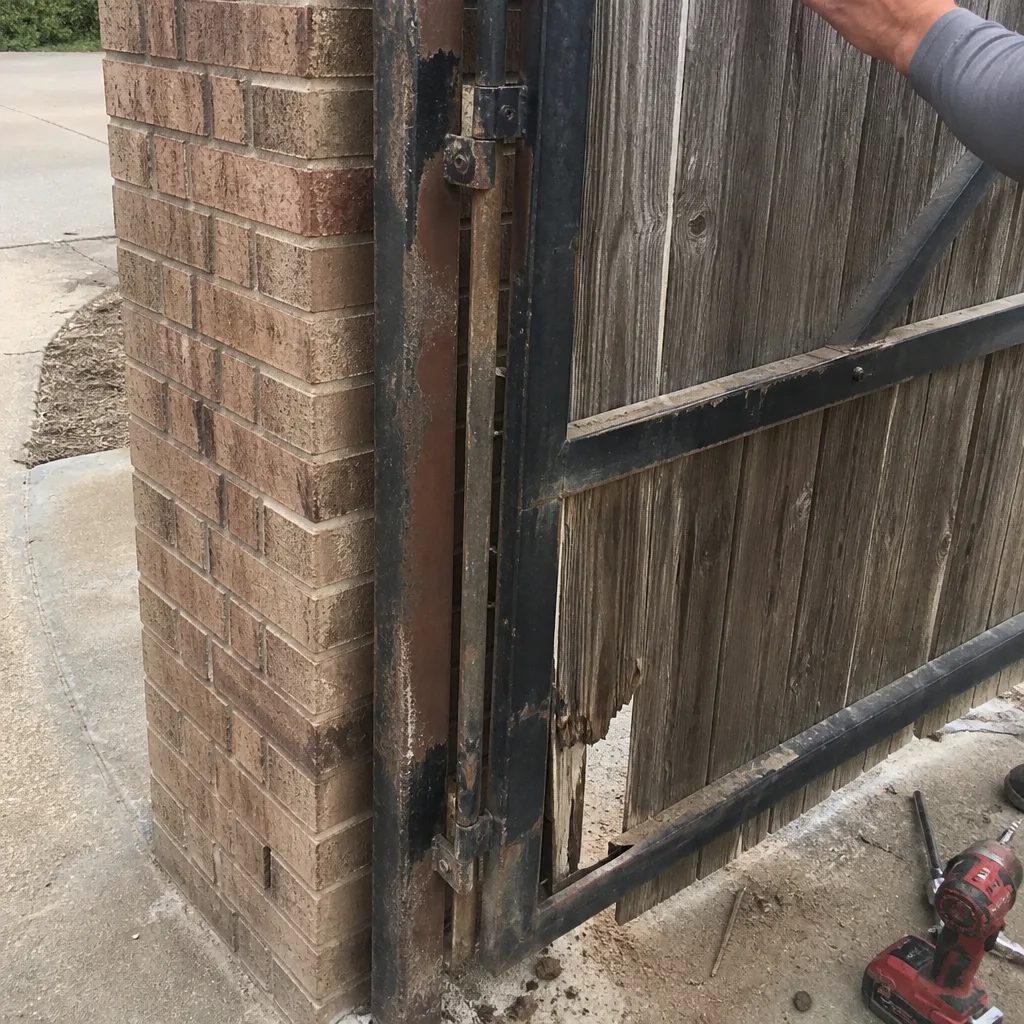 Before
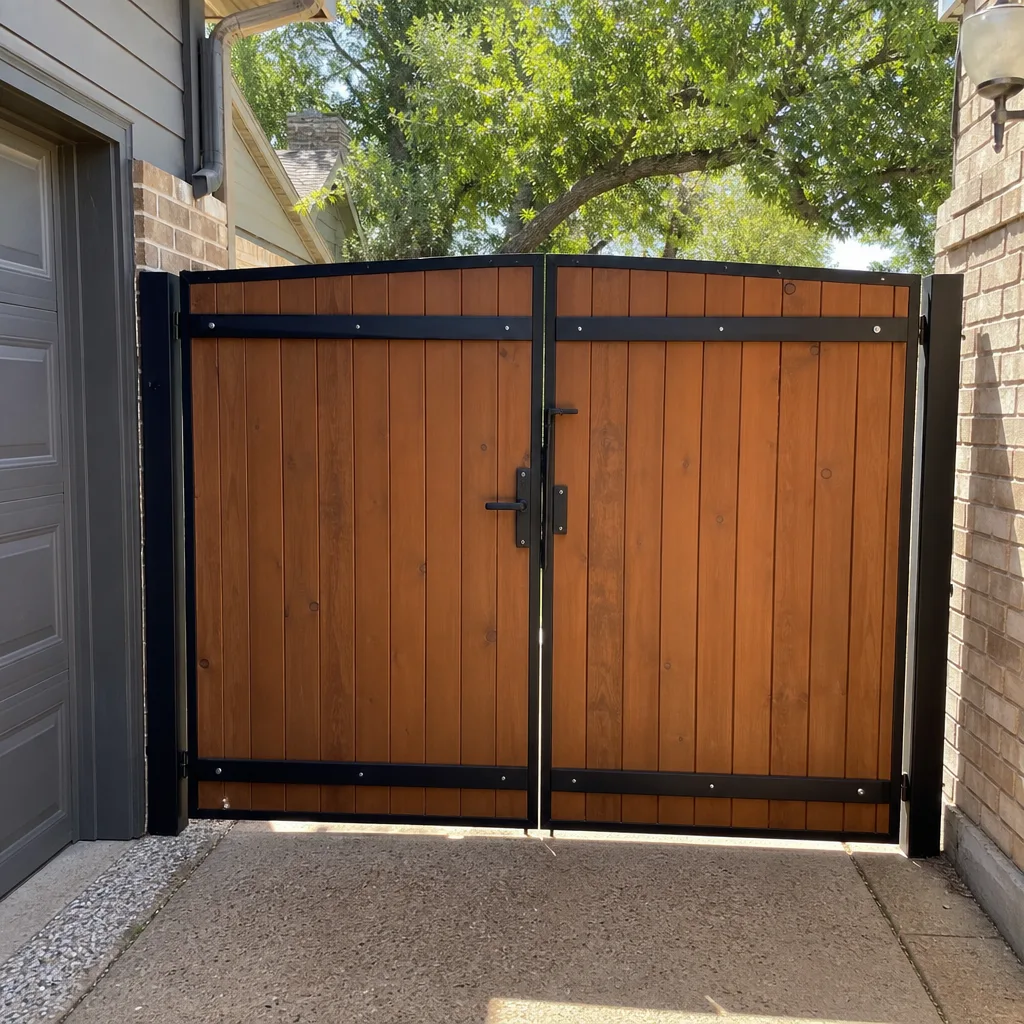 After
After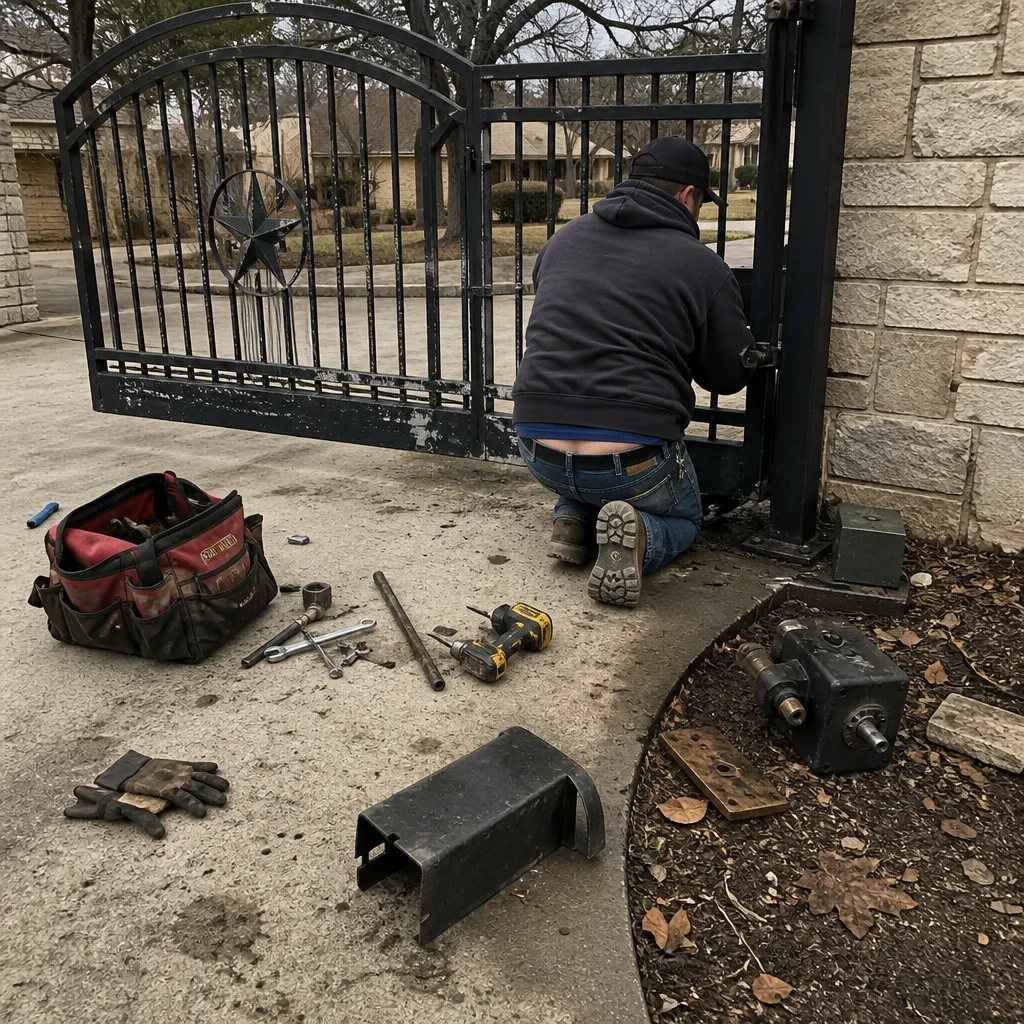 Before
 After
After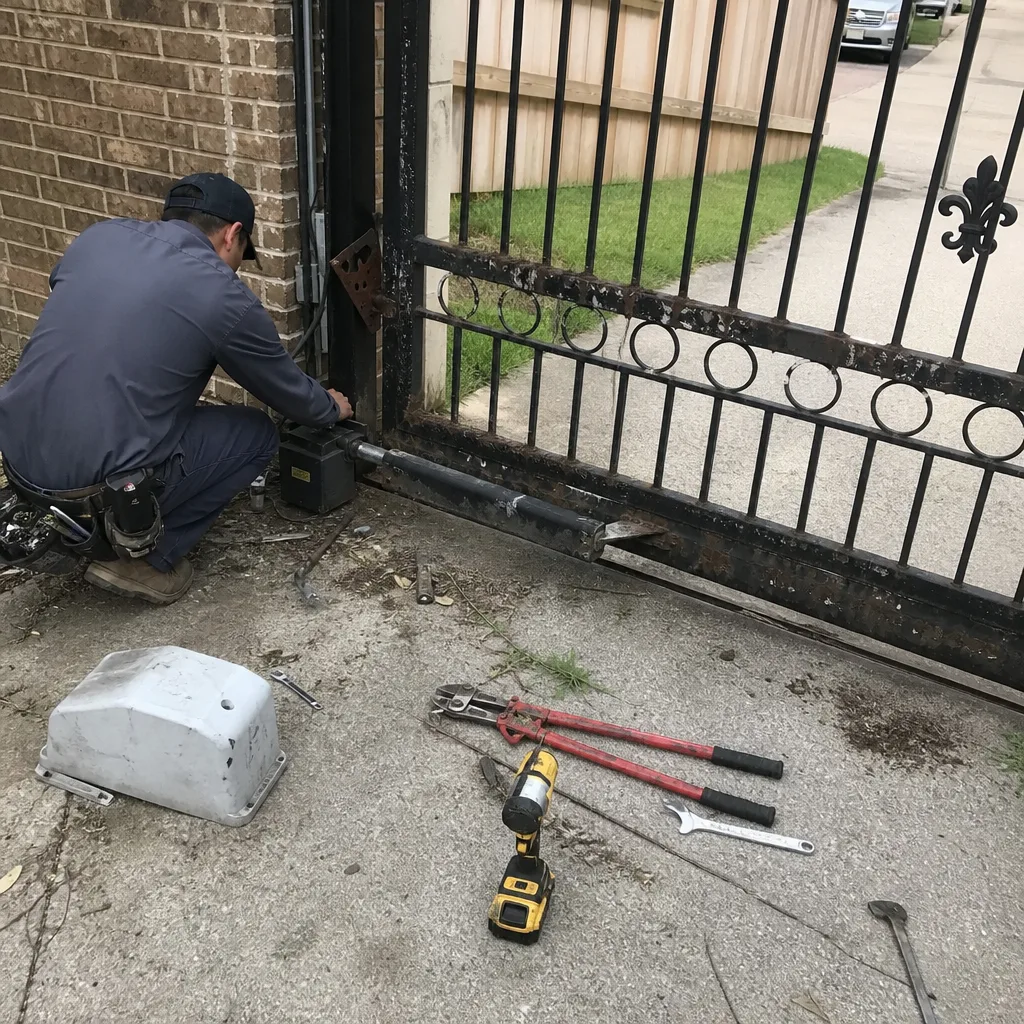 Before
 After
After