
Last updated October 17, 2026
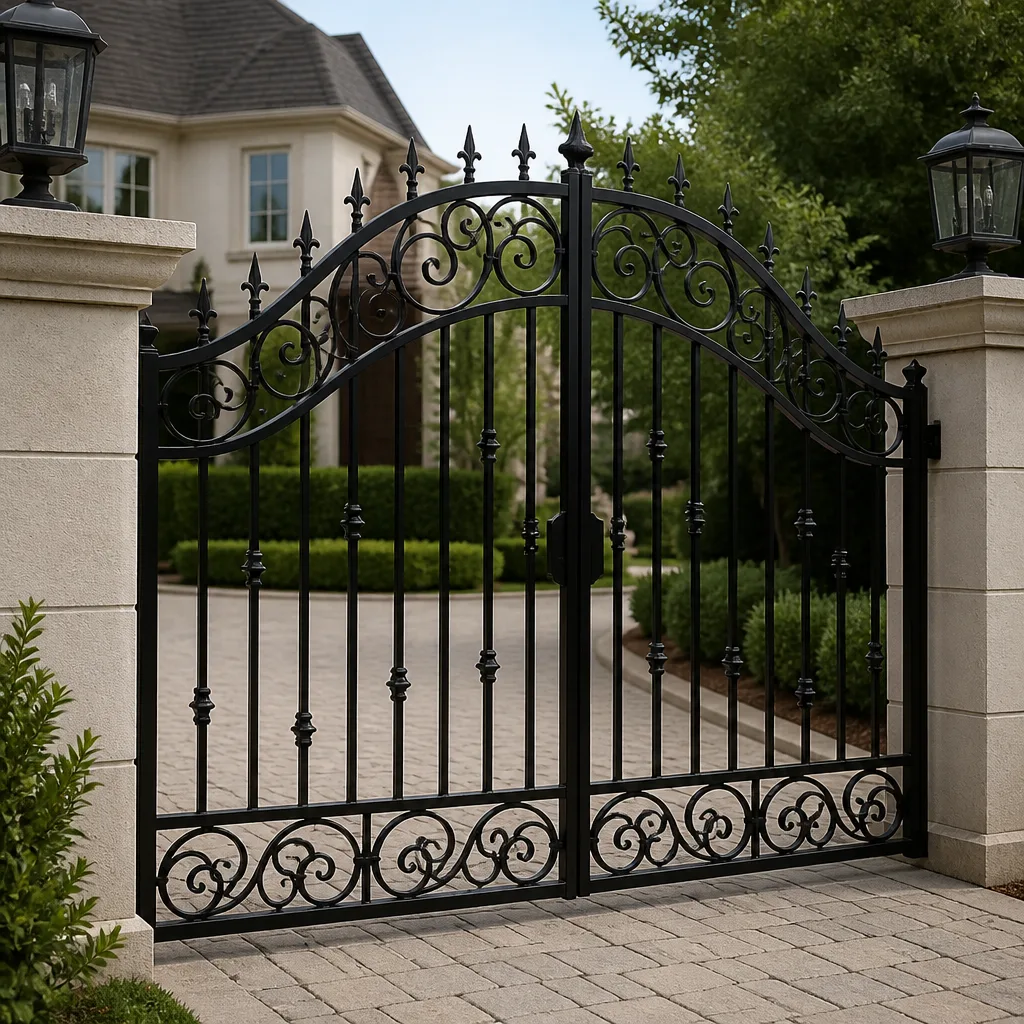 Wrought iron
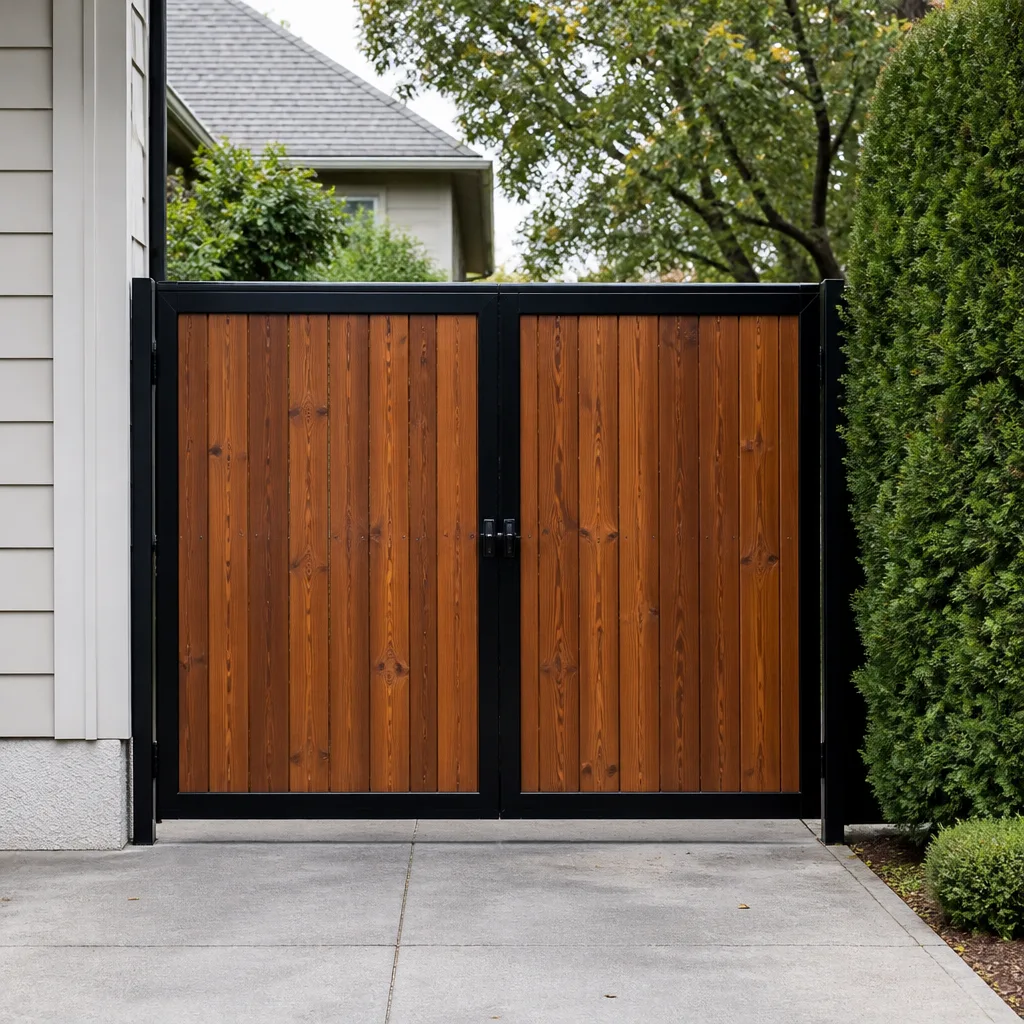 Wood & steel frame
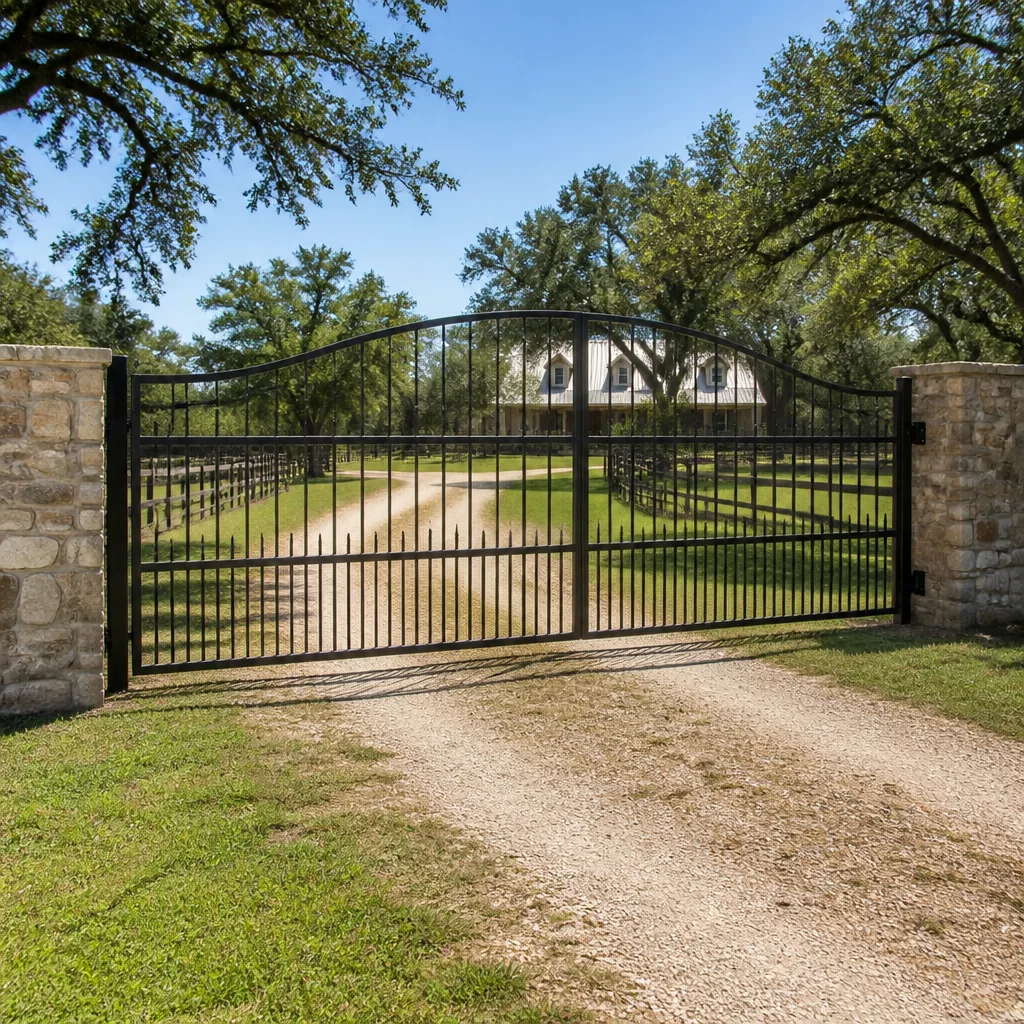 Farm & ranch
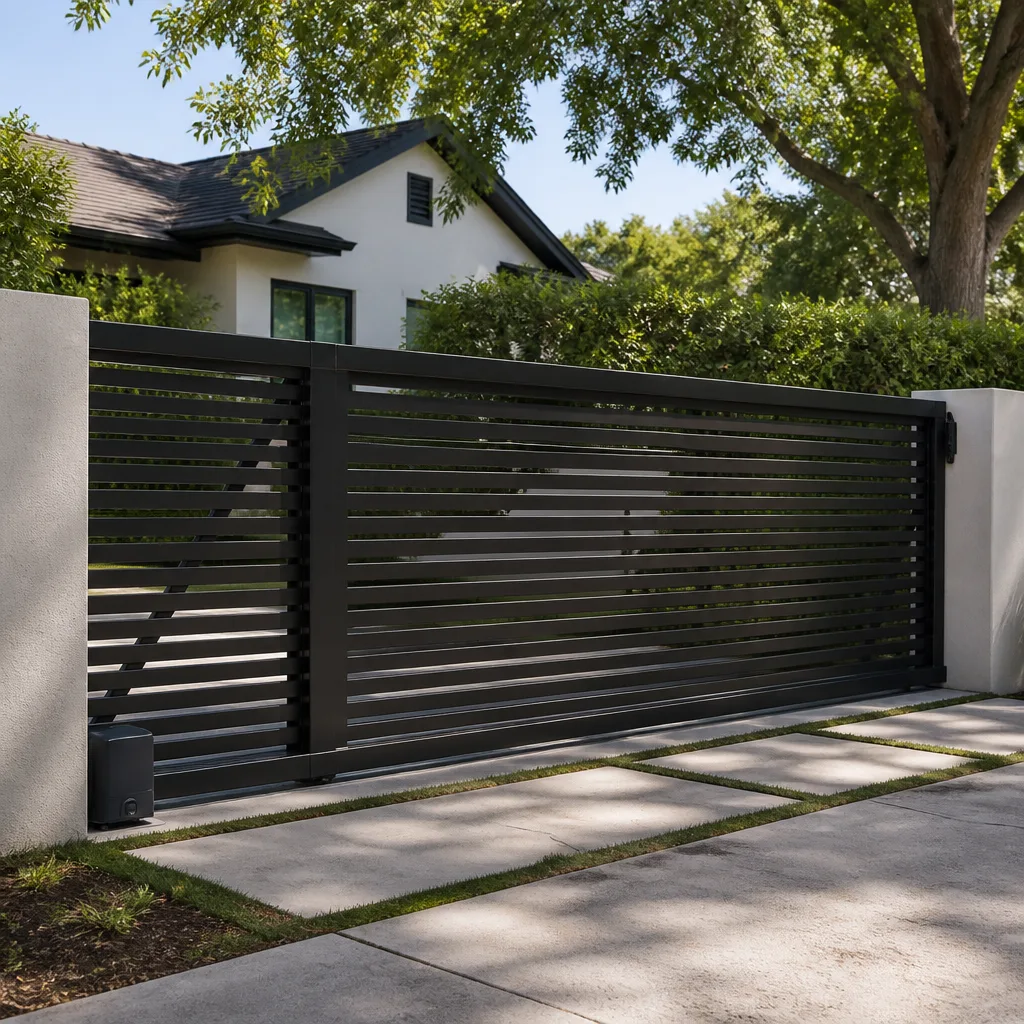 Sliding driveway gates
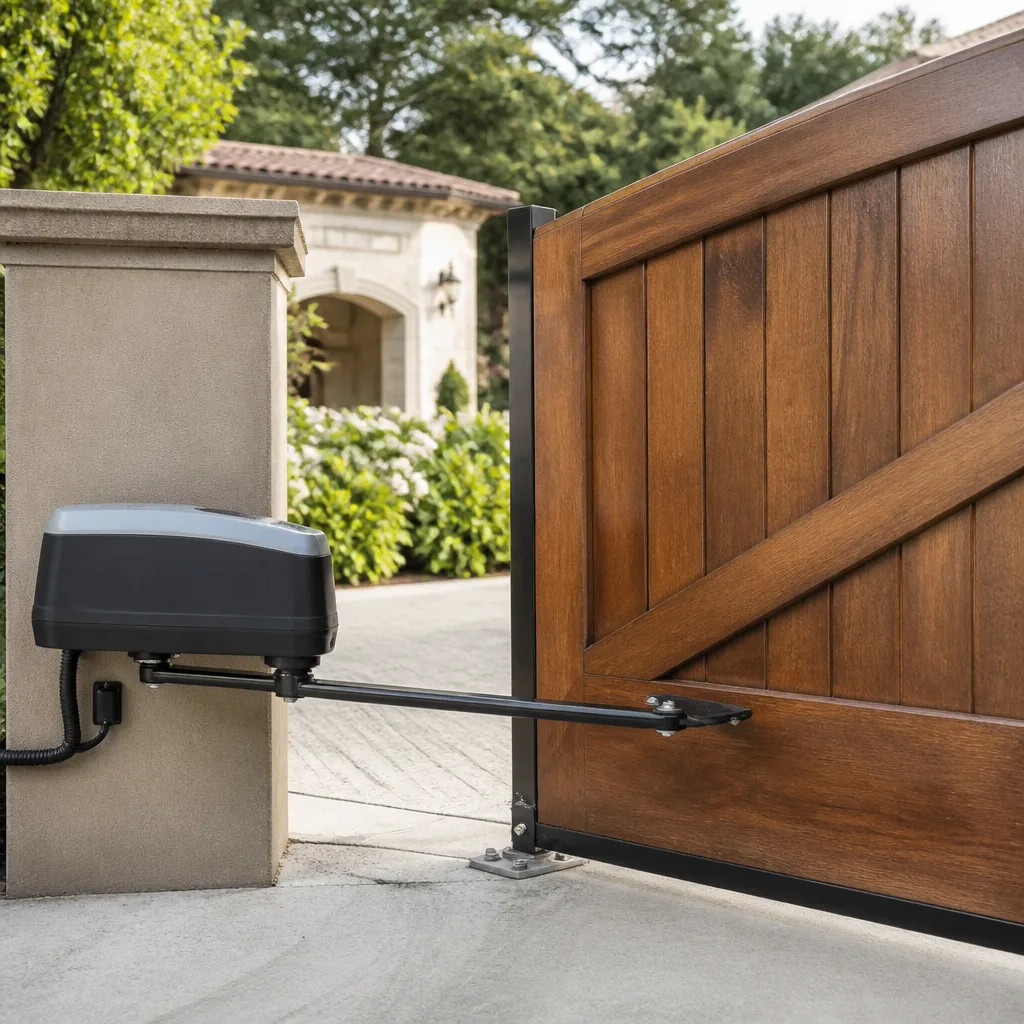 LiftMaster operators
Free on-site gate assessment - hinges, posts, and your LiftMaster or Nice gate operator checked before anything is quoted
The assessment is free and the quote is the invoice.
Get your free estimateGate Repair Maintenance Checklist for Fort Worth Homeowners
Most gate maintenance advice you’ll find online was written for someone in Ohio or Oregon. It ignores the one fact that defines gate ownership in Fort Worth: our summers cook everything. A hinge lubricated with the wrong product in July will be dry and grinding by Labor Day. A cedar gate sealed on the wrong schedule will cup and crack within eighteen months. This guide is built around the specific stressors of Fort Worth: sustained heat above 100°F, expansive clay soil that shifts posts, and spring humidity spikes that swell wood and rust untreated steel. You’ll get exact inspection intervals, specific products to use, and the threshold at which a problem moves from “watch it” to our Gate Repair services.
Styles & brands we work with
Quick Answer
A Fort Worth gate maintenance routine has three tiers: monthly visual checks (5 minutes), quarterly lubrication and hardware tightening (30 minutes), and annual deep inspections of posts, hinges, and electric operator components. The most common failure points in Fort Worth are dry hinges from summer heat, post lean from clay soil movement, and rusted latch internals from spring humidity. For more guides & resources, download the printable log at the end of this guide and keep it in a kitchen drawer.
Table of Contents
- Why Fort Worth Gates Fail Differently
- Monthly Checklist: The 5-Minute Walkaround
- Quarterly Checklist: Lubrication and Hardware
- Annual Checklist: Deep Inspection
- Lubricant Guide by Component
- Measuring Post Plumb: When Lean Becomes Urgent
- Cedar Gate Care in North Texas
- Electric Gate Operator Maintenance
- Printable Maintenance Log
- Common Mistakes to Avoid
- When to Call a Professional
- Frequently Asked Questions
Why Fort Worth Gates Fail Differently
A gate in Fort Worth is exposed to three forces that most maintenance guides never address. Understanding them changes what you inspect, when you inspect it, and what products you buy.
Heat above 100°F
Fort Worth averages 16 to 20 days per year above 100°F, and the surface temperature of a dark metal gate in direct sun can reach 140°F or higher. Standard petroleum-based lubricants thin out and run off at those temperatures. WD-40, which many homeowners reach for first, is a solvent and water displacer, not a lubricant. In a Fort Worth July it evaporates within two to three weeks, leaving hinge pins drier than before. The correct product for most gate hinges is a lithium-based grease rated above 250°F or a dry graphite lubricant for latch internals.
Expansive clay soil
Most of Fort Worth sits on the Eagle Ford Shale and Houston Black clay formations. These soils expand when wet and contract when dry, sometimes shifting by several inches across a single season. Gate posts set in concrete are not immune. The soil beneath the footing moves, and the post moves with it. We see post lean most commonly in neighborhoods built on heavy clay, including areas around TCU, Wedgwood, and the older sections of Arlington Heights. The repair threshold is specific: a post more than 1.5 inches out of plumb over its height needs professional attention. Less than that, and you can watch it through the next season.
Spring humidity spikes
Late April through June brings humidity swings that encourage rust on untreated steel hardware and swelling in cedar gates. The expansion and contraction cycle is what damages wood. When a cedar gate swells, the boards press against each other and against the frame. When it dries out in August, the boards shrink and gaps appear. Repeated cycles cause splitting, cupping, and nail or screw pull-out. The fix is a sealer schedule that anticipates both extremes, which we cover in the cedar section below.
Monthly Checklist: The 5-Minute Walkaround
Monthly inspections catch problems before they become repairs. The entire walkaround takes about five minutes and requires no tools beyond your eyes and hands. Do this on the first weekend of every month, year-round, not just in spring.
- Open and close the gate fully twice. Listen for grinding, squealing, or clicking. A healthy gate is quiet. Any new noise means something is dry, loose, or out of alignment.
- Watch the gate as it swings. Does it drift, sag, or rub against the ground or frame? Note which edge is dragging. That tells you whether the hinge side or the latch side is failing.
- Check the latch alignment. The latch bar should enter the catch cleanly without lifting or pushing the gate. If you have to lift the gate to get the latch to engage, the hinges are wearing or the post is leaning.
- Look at the hinge hardware. Surface rust on the hinge pin or leaves is a warning sign, not an emergency, but it needs attention before the next rain. Dry hinges are the number one cause of premature hinge failure in Fort Worth.
- Inspect the bottom of the gate. The lower 6 to 8 inches take the most abuse from rain splash, sprinkler overspray, and soil contact. Check for peeling paint, exposed wood, or rust forming along the bottom rail.
- Walk the fence line 10 feet in each direction from the gate. A gate is only as stable as the fence and posts that support it. Look for new cracks in the soil around post footings, a sign of clay movement.
Keep a small notebook in the kitchen or the garage and jot down anything you notice. A one-line note to be reviewed at the quarterly check is all that’s needed: “gate rubs at latch corner, minor rust on lower hinge.” This habit is the most useful thing you can do for your gate, because it gives you a baseline. When something changes, you’ll notice it immediately.
Quarterly Checklist: Lubrication and Hardware
Quarterly maintenance happens four times a year. It requires about 30 minutes, a few specific products, and basic tools you likely already own. The schedule that works best for Fort Worth is: early March (before spring humidity), early June (before peak heat), early September (after peak heat), and early December (before the light frost season).
What you’ll need
- Lithium-based grease rated above 250°F (for hinges)
- Dry graphite lubricant (for latch internals and lock cylinders)
- Socket set or adjustable wrench (for tightening hardware)
- Rags or shop towels
- Penetrating oil such as PB Blaster or Liquid Wrench (for rusted fasteners only)
Steps
- Clean the hinge pins before lubricating. Wipe each pin with a rag to remove old grease, dirt, and debris. Adding new grease on top of old contaminated grease just traps grit against the metal.
- Inject lithium grease into each hinge. Most residential gate hinges have a grease fitting or a gap at the top of the pin barrel. Apply enough grease that a small bead appears at the joint. Wipe away the excess. Grease that beads outside the hinge collects dust and becomes an abrasive paste.
- Apply graphite to the latch mechanism. Do not use grease on latch internals. Grease collects dust and grit, which jams the mechanism. A dry graphite puff into the latch body and keyed lock cylinder is the correct product. Do this every quarter, even if the latch feels smooth.
- Tighten every visible fastener. Gate hinge bolts, latch screws, and post brackets all loosen over time due to cycles of open-close vibration and temperature expansion. A 10-inch adjustable wrench or 1/2-inch socket handles most residential hardware. Snug them down, but don’t overtighten. Overtightening strips threads and deforms brackets.
- Check the gate’s resting position. Close the gate and stand back. It should be level across the top rail and evenly gapped on both sides. If the gap at the latch side is wider at the top than the bottom, the gate is sagging and hinge wear is the likely cause.
We see a consistent pattern in Fort Worth: homeowners who complete quarterly lubrication get three to five more years out of their gate hardware than homeowners who don’t. The difference is not the brand of grease. It’s the consistency. A gate hinge that runs dry for even one Fort Worth summer accumulates wear that no amount of later lubrication can reverse.
Annual Checklist: Deep Inspection
Once a year, set aside an hour for a thorough inspection that goes beyond what’s visible at a glance. The best time in Fort Worth is October or November, after the heat has broken and before the first hard freeze. The moderate weather lets you work comfortably and catches any damage done during the summer months.
Post inspection
- Check both gate posts for lean using the plumb method described in the post section below.
- Look for cracks in the concrete footing around each post.
- Look for a gap between the soil and the concrete footing. A visible gap means the soil has contracted away from the footing during a dry period, and the post may be moving.
- Check for rust blooms where the post meets the concrete. This is a constant-moisture zone and the first place steel posts fail.
Hinge and hardware inspection
- Lift the gate by hand. Any vertical play of more than 1/8 inch means hinge pin or bushing wear. Replacement hinge pins are inexpensive; replacement hinge brackets are a bigger job. Catch it at the pin stage.
- Remove one hinge pin and inspect it. A worn pin shows visible grooves or a polished flat spot. Replace worn pins as a set, all hinges at once, so the gate wears evenly.
- Check every bolt for rust at the threads. Surface rust is cosmetic. Pitted rust means the fastener is losing structural strength and should be replaced with a galvanized or stainless equivalent.
Gate frame and panel inspection
- Check for wood rot at the bottom rail and any point where water can pool. On metal gates, check for rust perforation at weld points.
- Inspect pickets or boards for splits and cupping. A split board on a cedar gate is an early warning that the gate is absorbing too much moisture or drying too fast. Address the board and the moisture cause together.
- Check that the gate swings freely without binding. A gate that binds at one point in its arc has a post or hinge alignment problem, not a lubrication problem.
In our experience, the annual inspection is where we find the problems that eventually become emergency calls in June or July. Specifically, we find dry hinges and worn pins long before the homeowner notices a sag. What’s not on this list matters too. We never recommend homeowners spray anything onto electric operator components (Gate Repair Permits, Codes & Inspections in TX: What You Need to Know). That’s covered in the electric section below, and it’s a different animal entirely.
Lubricant Guide by Component
The single most useful piece of gate maintenance knowledge for a Fort Worth homeowner is this: different gate parts need different lubricants. Using the wrong product does more harm than using no product at all. Here is the full breakdown by component.
| Component | Correct product | Why | Frequency |
|---|---|---|---|
| Gate hinges (pin and barrel) | Lithium-based grease, rated above 250°F | Stays in place under direct sun and 100°F+ air temperature. Does not run off like spray oils. | Every 3 months |
| Latch mechanism (internal) | Dry graphite powder | Does not attract dust or grit. Works in the tight tolerances of a latch body where grease would jam. | Every 3 months |
| Keyed lock cylinder | Dry graphite powder | Same reason as latch internals. Oil-based products gum up lock pins and freeze them in winter. | Every 6 months |
| Electric operator chain (chain-drive openers) | Silicone spray, applied lightly | Silicone does not collect dirt the way oil does. A dirty chain wears sprockets and shortens operator life. | Every 6 months |
| Electric operator arm or piston | Nothing unless specified by manufacturer | Most residential swing-arm operators are sealed. Spraying them adds a film that collects dust and grit. | Never |
| Cedar gate surface | Penetrating wood sealer (see cedar section) | Seals and protects wood fibers without forming a surface film that peels in Fort Worth sun. | Every 12 to 18 months |
Two mistakes we see repeatedly in Fort Worth. The first is WD-40 on hinges. As noted above, it evaporates and leaves the hinge dry. The second is grease in latch mechanisms. The latch body has a small spring and a sliding bolt. Grease binds them. Homeowners often call us for a sticky latch and are surprised to learn that the fix is a cleaning and a $4 tube of graphite, not a new latch. The right product costs less than the wrong product every single time.
Measuring Post Plumb: When Lean Becomes Urgent
A leaning gate post is the most consequential maintenance issue in Fort Worth, because our clay soil guarantees that some movement happens on nearly every property over time. The question is never whether a post will lean. The question is how far it has leaned and whether it’s still moving. Here’s how to measure it accurately without any special equipment.
What you need
- A 4-foot level (a 2-foot level works but is less precise)
- A tape measure
Steps
- Place the level vertically against the side face of the gate post, not the gate itself.
- Hold the level perfectly plumb. The top and bottom bubbles should both center.
- With the level held plumb, measure the gap between the level and the post at the widest point.
- Record the gap and the post height. Express lean as a fraction: “post leans 3/4 inch over 6 feet.”
Interpreting your measurement
- Less than 1/2 inch over 6 feet: Within normal tolerance. Note it in your log and re-check next quarter.
- 1/2 to 1 inch over 6 feet: Watchful. The post is moving but not yet failing. Re-check monthly. If the lean increases, move to action.
- 1 to 1.5 inches over 6 feet: Schedule attention. The gate is likely already sagging or binding. The post needs resetting or reinforcement before the hinge side fails.
- More than 1.5 inches over 6 feet: Urgent. The gate’s weight is now working against the post, accelerating the lean. Continued use risks hinge failure and possibly gate collapse. Stop using the gate and call a gate repair specialist.
One correction to common advice: don’t try to pull a leaning post back with a come-along or ratchet strap and then “just add some concrete.” A post set in expansive clay has a footing that is being pushed by soil pressure. Adding more concrete without addressing drainage or soil expansion pushes the problem down the line. The fix for a leaning post in Fort Worth is either resetting the post in a proper footing with gravel drainage, or reinforcing the existing post with steel driven below the active clay zone. Both are jobs for a professional with the right equipment. We cover Gate Repair in Fort Worth including post resets, and the estimate is free.
Cedar Gate Care in North Texas
Cedar is the most common wood gate material in Fort Worth for a good reason: it resists rot and insects better than pine, and it holds up to sun without warping the way cheaper woods do. But cedar gates still fail here, and the failures are predictable. They split, cup, and separate at the joints because of the moisture cycle. The fix is a sealer schedule matched to North Texas humidity patterns.
Know the signs
- Gates absorbing too much moisture: boards swell, edges cup upward, the gate binds in its frame, and you may see black mildew staining in shaded areas.
- Gates drying out: boards shrink, gaps open between pickets, split ends appear, and the gate rattles loosely in the frame.
- Iron-rich water staining: reddish-brown streaks below hardware, common in Fort Worth where water is moderately hard. This is cosmetic but signals where water is flowing.
Sealer schedule for Fort Worth
Use a penetrating oil-based sealer, not a film-forming varnish or polyurethane. Penetrating sealers soak into the wood fiber and let the cedar breathe. Film sealers trap moisture inside during spring humidity and peel in summer heat, usually within one season.
- First application: May, as humidity begins to rise. The sealer slows moisture absorption during the spring swell period.
- Second application: September, after the driest part of the year. This stabilizes the wood before the cool season.
- On new cedar gates: apply the first coat within 30 days of installation, then follow the May and September schedule thereafter.
- Re-check quarterly: splash water on the cedar. If the water beads, the sealer is working. If the wood darkens and absorbs water, it’s time to re-apply.
Most Fort Worth homeowners with cedar gates will need to re-apply sealer every 12 to 18 months. Homes with full-sun southern or western exposure may need it annually. Shaded gates under oak or pecan trees can stretch to 18 months but should be checked for mildew in spring.
Electric Gate Operator Maintenance
Electric gate operators, whether they’re swing-arm, slide, or ram-style units, add maintenance tasks that manual gates don’t have. The good news is that most of the routine care is simple. The caution is that the dangerous parts, the motor, control board, and gear train, should be left sealed and untouched. Brands we work on regularly in Fort Worth include Linear, BFT, and Viking. Each has its own manual and service interval, and the manufacturer’s instructions always come first.
Homeowner maintenance tasks
- Test the auto-reverse sensitivity every quarter. Place a 2×4 on the ground in the gate’s path and close the gate. The gate should stop and reverse before applying full pressure. This is a safety feature. Checking it takes five minutes.
- Check the photo eyes or edge sensors monthly. Wipe the lens with a dry cloth. Fort Worth dust and pollen accumulate on sensor lenses in spring and reduce detection range.
- Listen to the operator run. A smooth hum is normal. Grinding, chattering, or a sudden change in pitch means a lubrication or alignment problem inside the operator or the gate itself. Address it before it becomes a full failure.
- Inspect the operator arm or chain for debris. Leaves, grass clippings, and wind-blown dirt collect around slide gate tracks and swing arms. Clear debris from tracks and keep the area swept.
- Check the backup battery if your operator has one. Many Fort Worth operators have battery backup for power outages. Batteries last 2 to 4 years. Test by disconnecting the operator and running the gate on battery only. Replace it if the gate runs slowly or the battery warning light stays on.
- Using WD-40 to lubricate anything on the gate. It’s a solvent and moisture displacer. In Fort Worth heat it evaporates in two to three weeks and leaves the hinge drier than before. Use lithium grease on hinges and graphite in latches.
- Skipping the lubricant in fall. Many homeowners lube in spring and think they’re set for the year. By October, summer heat has already cooked off whatever was applied in March. A September lubrication carries you through winter and prevents wear during the heaviest use months of fall.
- Waiting to fix a sagging gate. A gate that sags slightly is a gate in early hinge failure. Every open and close after that point wears the hinges unevenly and accelerates the damage. Hinge pins are cheap; replacement hinges on a damaged frame are not.
- Painting over corroded hardware without treating the rust. Rust continues underneath paint. Wire-brush or sand the surface down to bare metal, treat with a rust converter, then prime and paint. Otherwise you’ll repaint annually and wonder why it never lasts.
- Letting sprinklers hit the gate. This is a Fort Worth-specific problem. Irrigation overspray hits the gate bottom daily, and the minerals in Fort Worth’s hard water build up on wood and steel. Adjust sprinkler heads so they don’t spray the gate, or install a deflector.
- Forcing an electric gate open by hand during a power outage. Many operators lock in place when power cuts to keep the gate secure. Forcing the gate can strip the gear train and damage the operator. Release the manual override first, which is documented in the operator’s manual. If you don’t have the manual, your operator brand’s website will have a PDF.
- Ignoring a gate that slams shut. A gate that closes too fast is a safety hazard for kids and pets. It usually means the closing speed is set too high, the gate’s balance is off, or a spring or closer has failed. Address it immediately, not eventually.
What to leave alone
The operator’s motor, internal gearbox, and control board are sealed assemblies. Do not open the housing and do not spray anything into the housing. Internal components are factory-lubricated and do not need homeowner service. Opening the housing can void the warranty. If the operator is making internal noise, tripping breakers, or running erratically, that’s a job for someone trained on that specific brand. We service Linear, BFT, Viking, and Ghost Controls operators, and our technicians are factory-trained on each. If you need Electric Gate Repair in Fort Worth, we’ll diagnose the issue and give you a written price before any work begins.
One note on power runs: if you’re adding an operator to an existing manual gate, the power run and the operator installation are separate jobs. Our Gate Installation in Fort Worth service includes the full power run, safety edges, and the operator itself, priced clearly before we start.
Printable Maintenance Log
A maintenance log is the single most underrated tool in gate care. It costs nothing and it transforms how quickly problems get diagnosed. When you call a gate company, whether it’s us or someone else, a log that shows what was lubricated, when, and what you observed gives the technician a history instead of a mystery. Here’s a format that fits on a single sheet and takes 30 seconds to fill out after each check.
| Date | Check type (Monthly / Quarterly / Annual) | What I did or observed | Follow-up needed? |
|---|---|---|---|
| Example: 3/2/2026 | Monthly | Gate rubs at latch corner. Light rust on lower hinge pin. | Re-check in June. Clean and grease hinges. |
| Example: 6/7/2026 | Quarterly | Lubricated hinges with lithium grease. Graphite in latch. Tightened all hinge bolts. | None. |
| Example: 10/19/2026 | Annual | Post lean measured at 3/4″ over 6 feet. Cedar gate absorbs water, needs sealer. | Seal in May. Measure post again in January. |
Print this table, tape it inside a kitchen cabinet door, and fill in one row per inspection. If you call us or any other contractor, that log is the fastest way to get an accurate diagnosis and a faster quote. It also protects you: if a technician recommends a repair, you have a written record of what was normal before, when it changed, and what you’ve already done. That’s the difference between an informed decision and a guess.
Common Mistakes to Avoid
When to Call a Professional
Some maintenance tasks are genuinely DIY. Lubricating hinges, tightening bolts, and keeping a log are all within a homeowner’s ability. But there are lines where professional help is the safer and cheaper choice. If your gate post leans more than 1 inch over 6 feet, or if the gate binds and will not swing freely, you’re past maintenance and into structural repair. If your electric gate operator is making internal noise, tripping breakers, or moving erratically, it needs a diagnosis from someone factory-trained on the specific brand. If your gate has already sagged enough to drag on the ground, every additional use is wearing out parts that will need to be replaced anyway. Stop using it and call. Latch and Post Gate Repair Fort Worth offers free estimates in Fort Worth. Call (682) 841-5749 and we’ll come out, take a look, and hand you a written price before any work begins. No pressure, no surprises.
We started Latch and Post as part of the Cedarwell family in 2009, and we’ve focused on this one thing ever since: gates, specifically the latch that holds them and the post that carries them. You can read more about what we do on our Latch and Post Gate Repair Fort Worth home page.
Frequently Asked Questions
Every three months, on a schedule that works with Fort Worth’s climate: early March, early June, early September, and early December. The September lubrication is the one most people skip, and it’s the one that matters most because summer heat has already broken down the previous application. Use a lithium-based grease rated above 250°F for hinges. Call (682) 841-5749 if you’d like our team to handle it as part of a quarterly service visit.
Most common gate repairs in Fort Worth fall into predictable ranges. A standard latch replacement typically runs $120 to $220 including parts and labor. A hinge pin and bushing set runs $80 to $150. Full hinge replacement on a heavy gate typically runs $180 to $320. Post resetting or reinforcement, the most involved common repair, typically starts around $350 and goes up depending on the post size and soil conditions. Every job is different, and you’ll see the exact number in writing before any work starts. Call (682) 841-5749 for a free estimate.
That’s the clay soil cycle in action. During summer dry periods, the soil contracts away from your post footings, and the post shifts outward, which drops the latch side of the gate. When fall rains return and the soil re-expands, the footing partially re-seats and the gate appears to recover. But each cycle moves the post a little further from its original position, and the play is cumulative. If you’re noticing seasonal sag, schedule a post inspection to see whether the movement is within tolerance or whether reinforcement is needed before the hinge side fails.
Use a penetrating oil-based wood sealer, applied twice a year in Fort Worth: once in May before spring humidity peaks, and again in September after summer heat has dried the wood. Avoid film-forming sealers like polyurethane or varnish. They trap moisture inside during humid spring months and peel in summer sun. The water-bead test tells you when it’s time to reseal: if water doesn’t bead on the surface, the sealer has worn through.
You can lubricate the chain or visible external moving parts if the manufacturer’s manual specifies it, using a light silicone spray. Do not open the operator housing and do not spray anything inside. The motor, gear train, and control board are sealed and factory-lubricated. If your operator is making noise or running erratically, call a professional. We service Linear, BFT, Viking, and Ghost Controls operators at Latch and Post, and we’ll diagnose the issue before recommending any repair. Call (682) 841-5749 for service.
Measure the post lean with a 4-foot level and tape measure. Less than half an inch of lean is normal. Half an inch to 1 inch is watchful and should be re-checked monthly. More than 1 inch means the post is moving and the gate is probably already binding or sagging. More than 1.5 inches is urgent. At that point the gate’s weight is accelerating the lean and the hinge side is in danger of failing. Call a professional for a post inspection. We reset and reinforce gate posts throughout Fort Worth, and the estimate is free.
The Bottom Line
A Fort Worth gate lasts years longer with a simple, consistent routine: walk around it monthly and make a note, lubricate it quarterly with the right products, and give it a full inspection every October. The climate here punishes neglect faster than most places, but it also rewards the homeowner who works on a schedule. Measure your posts, keep the log, use lithium grease on hinges and graphite on latches, and call a professional before a sag becomes a collapse. We built Latch and Post Gate Repair on the idea that a gate has two critical parts, the latch and the post, and that everything else follows from caring for both. If you want a second set of eyes on your gate, call (682) 841-5749. We’ll give you a written price before any work begins, and we’ll leave your home the way we found it, or cleaner.
Written by Cody Beckman, Owner at Latch and Post Gate Repair Fort Worth, serving Fort Worth since 2009.
See the difference
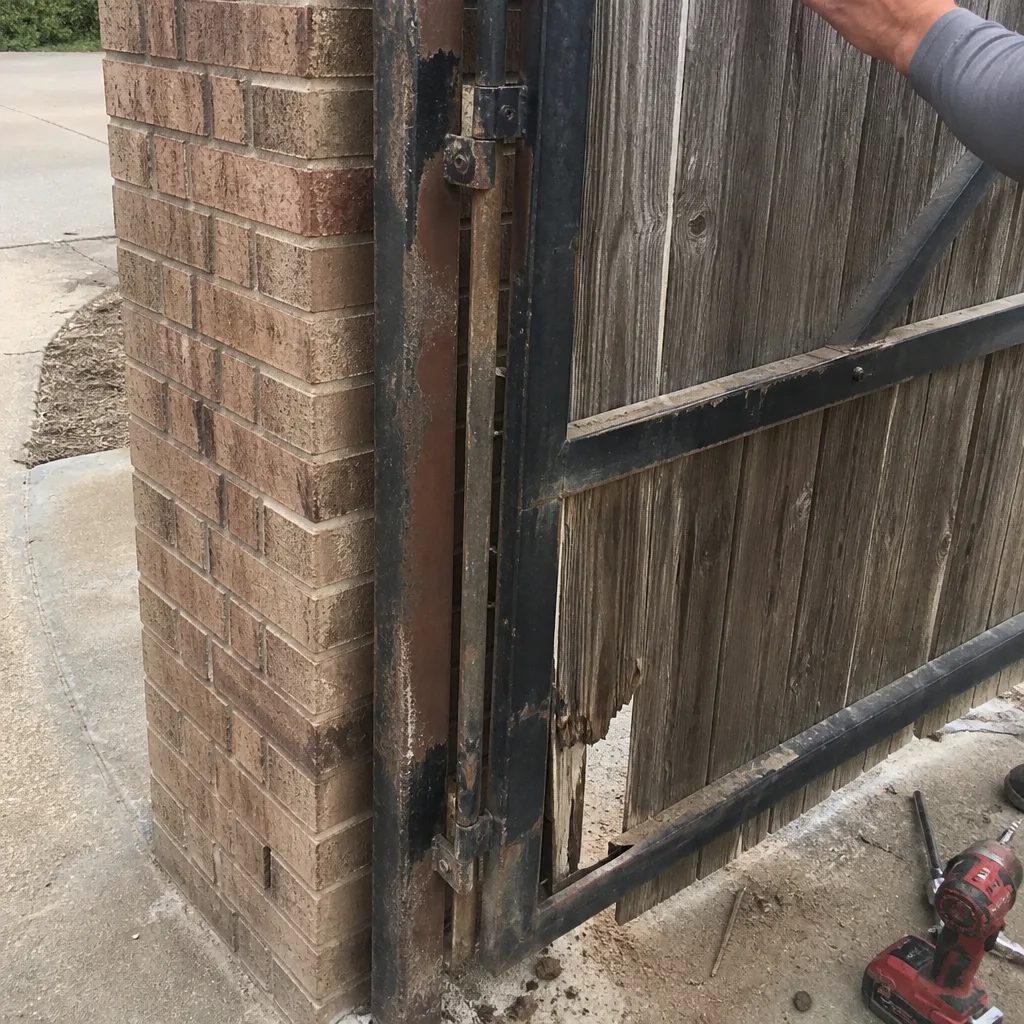 Before
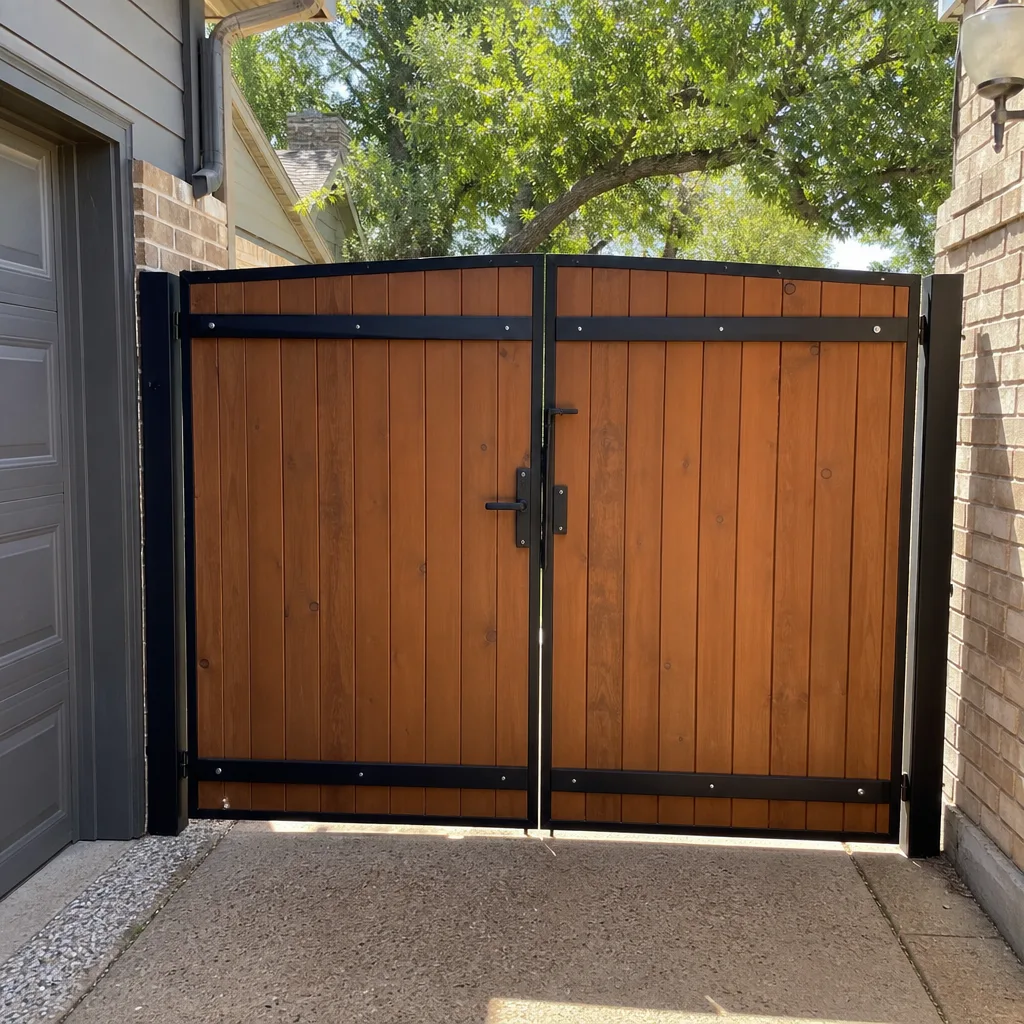 After
After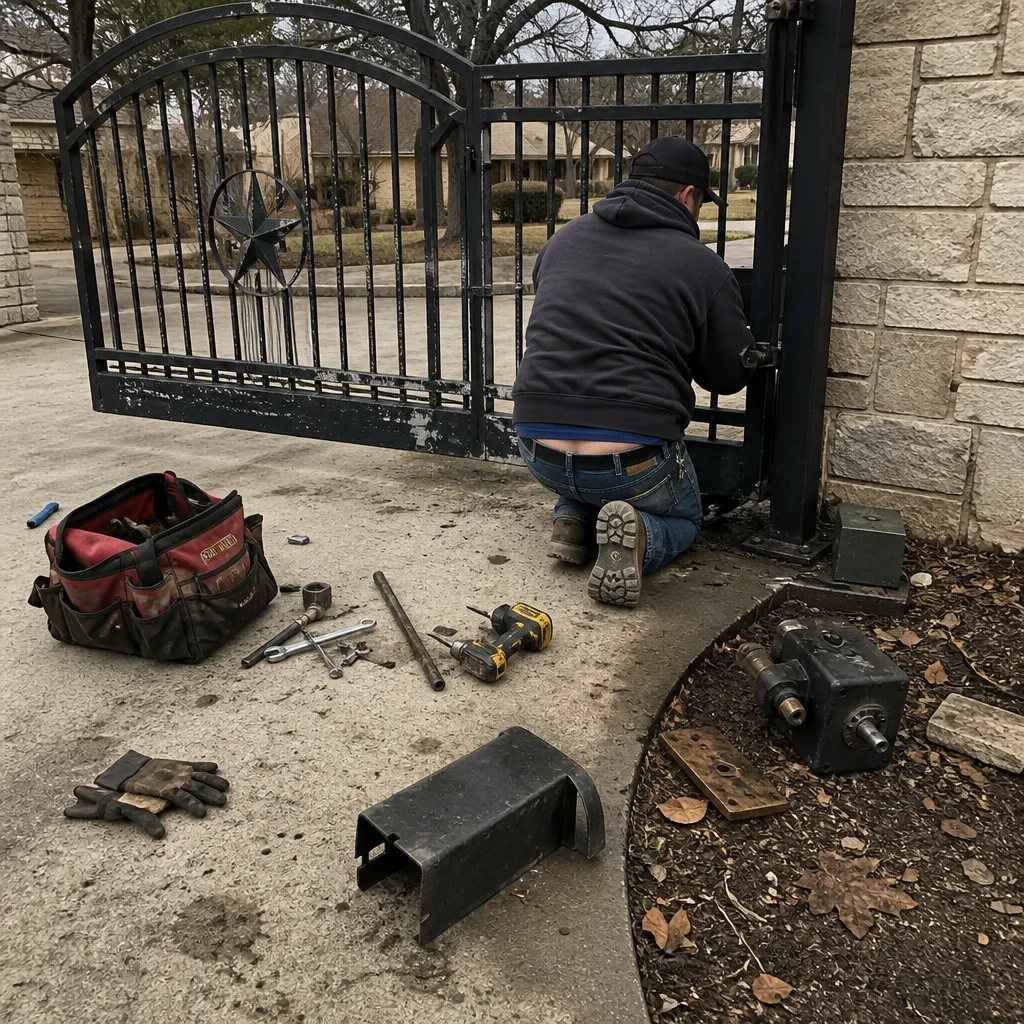 Before
 After
After Before
 After
After